Taking care of a pet becomes much easier when you have a simple and consistent daily routine. Pets depend on their owners for food, fresh water, cleanliness, exercise, attention, safety, and a comfortable living environment. A regular routine can help you remember these important responsibilities while also helping your pet feel comfortable with what happens throughout the day.
A daily pet care routine does not have to be complicated. The right routine depends on your pet’s species, age, size, lifestyle, health needs, and individual behavior. A young and active pet may need more play and exercise, while another pet may prefer a quieter routine.
For new pet owners, creating a practical schedule can make everyday responsibilities easier to manage. At Ahmad Pets Shop, we believe that understanding basic pet needs is an important part of responsible pet ownership. 🐾
This guide explains how to build a simple pet care routine that includes feeding, hydration, grooming, exercise, cleaning, interaction, safety, and observation.
Why a Daily Pet Care Routine Matters
Pets often feel more comfortable when their everyday environment is predictable. A consistent routine can help owners remember important care tasks and provide pets with regular opportunities for food, water, exercise, rest, and interaction.
A routine can also make it easier to notice changes in your pet’s normal behavior.
For example, if your pet normally eats well, plays regularly, and behaves in a particular way, a noticeable change may become easier to recognize when you know its usual routine.
A daily schedule is not meant to be strict every minute. Instead, it provides a general structure that can make daily pet care more organized.
Start the Day With Fresh Water
Fresh water is one of the basic needs of every pet.
At the beginning of the day, check your pet’s water supply and make sure the water bowl is clean. Replace old or dirty water with fresh water as appropriate.
Water bowls should also be cleaned regularly because food particles, dust, hair, and other debris can collect inside them.
Make sure your pet has access to suitable drinking water throughout the day. The exact amount a pet needs can vary, so follow appropriate veterinary guidance if you have concerns about your pet’s hydration.
💧 Simple habit: Make checking your pet’s water one of the first tasks of your morning routine.
Follow a Consistent Feeding Routine
Feeding is another important part of a daily pet care routine.
Different animals have different nutritional needs, and feeding requirements can also change depending on age, size, activity level, and other factors.
Use an appropriate pet food and follow feeding guidance from the product label or your veterinarian.
A regular feeding schedule can help you keep track of how much and how often your pet is eating.
When feeding your pet:
- Use suitable food for the animal.
- Follow appropriate portion guidance.
- Keep feeding areas clean.
- Provide fresh water.
- Avoid giving unsuitable human foods.
- Observe changes in appetite.
If your pet suddenly stops eating, eats significantly less than usual, or shows other concerning changes, contact a veterinarian for appropriate advice.
Keep the Feeding Area Clean
Pet food areas should be kept clean and organized.
After meals, check the feeding area for spilled food or debris. Wash food bowls regularly according to their material and use.
A clean feeding space can make your pet’s environment more comfortable and can also make your daily routine easier.
Try to keep food supplies stored appropriately and away from areas where they could become contaminated.
Give Your Pet Time for Exercise
Exercise is an important part of pet wellness. The amount and type of activity required will depend on your pet.
Dogs may benefit from walks, play sessions, and other suitable activities. Cats may enjoy interactive play, climbing opportunities, or toys that encourage movement.
Other pets have their own specific activity needs.
The goal is not to force your pet into excessive activity. Instead, provide appropriate opportunities for movement based on the animal’s individual needs.
🏃 Daily pet care tip: Choose activities that are safe, suitable, and enjoyable for your pet.
Include Play and Mental Stimulation
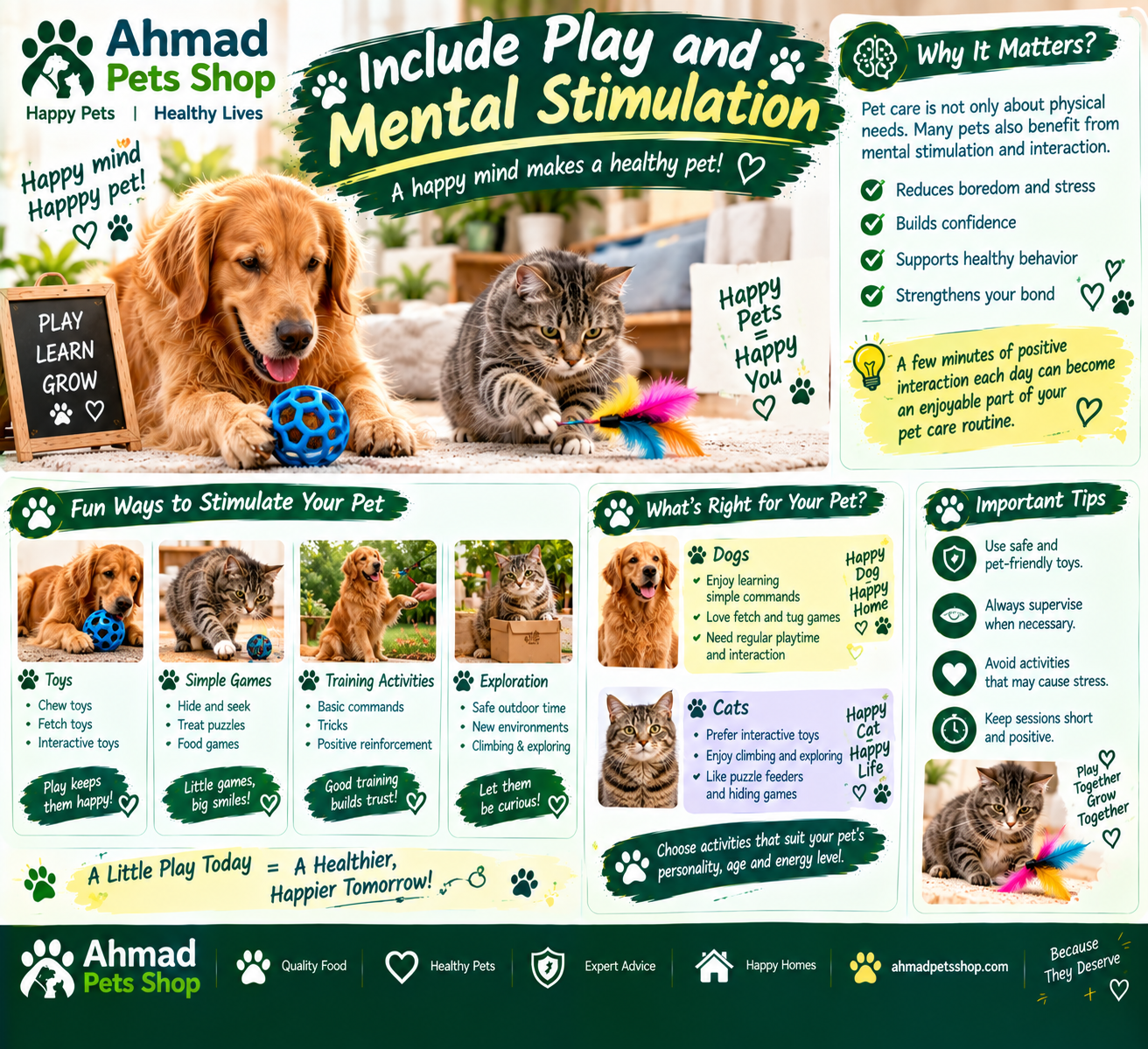
Pet care is not only about physical needs. Many pets also benefit from mental stimulation and interaction.
Toys, simple games, training activities, and exploration can provide opportunities for pets to use their natural behaviors.
For example, dogs may enjoy learning simple commands, while cats may enjoy interactive toys.
The right activities depend on the pet. Always choose toys and activities that are suitable for your animal and supervise when necessary.
A few minutes of positive interaction during the day can become an enjoyable part of your pet care routine. ❤️
Spend Quality Time With Your Pet
Pets can benefit from regular positive interaction with their owners.
This could involve playing, gentle interaction, training, grooming, or simply spending calm time together.
The type of interaction depends on the animal. Some pets enjoy being handled frequently, while others prefer having their own space.
Learn your pet’s preferences and respect its boundaries.
Building a positive relationship takes time. Consistency, patience, and appropriate interaction can help create a comfortable home environment.
Check Your Pet’s General Condition
A quick daily observation can be useful.
Look at your pet’s general behavior and appearance. You do not need to perform a detailed examination every day. Simply become familiar with what is normal for your pet.
You might notice:
- Changes in appetite
- Changes in activity
- Unusual behavior
- Changes in coat condition
- Difficulty moving
- Persistent scratching
- Changes in bathroom habits
- Signs of discomfort
One unusual behavior does not automatically mean something is seriously wrong. However, significant or persistent changes should be discussed with a veterinarian.
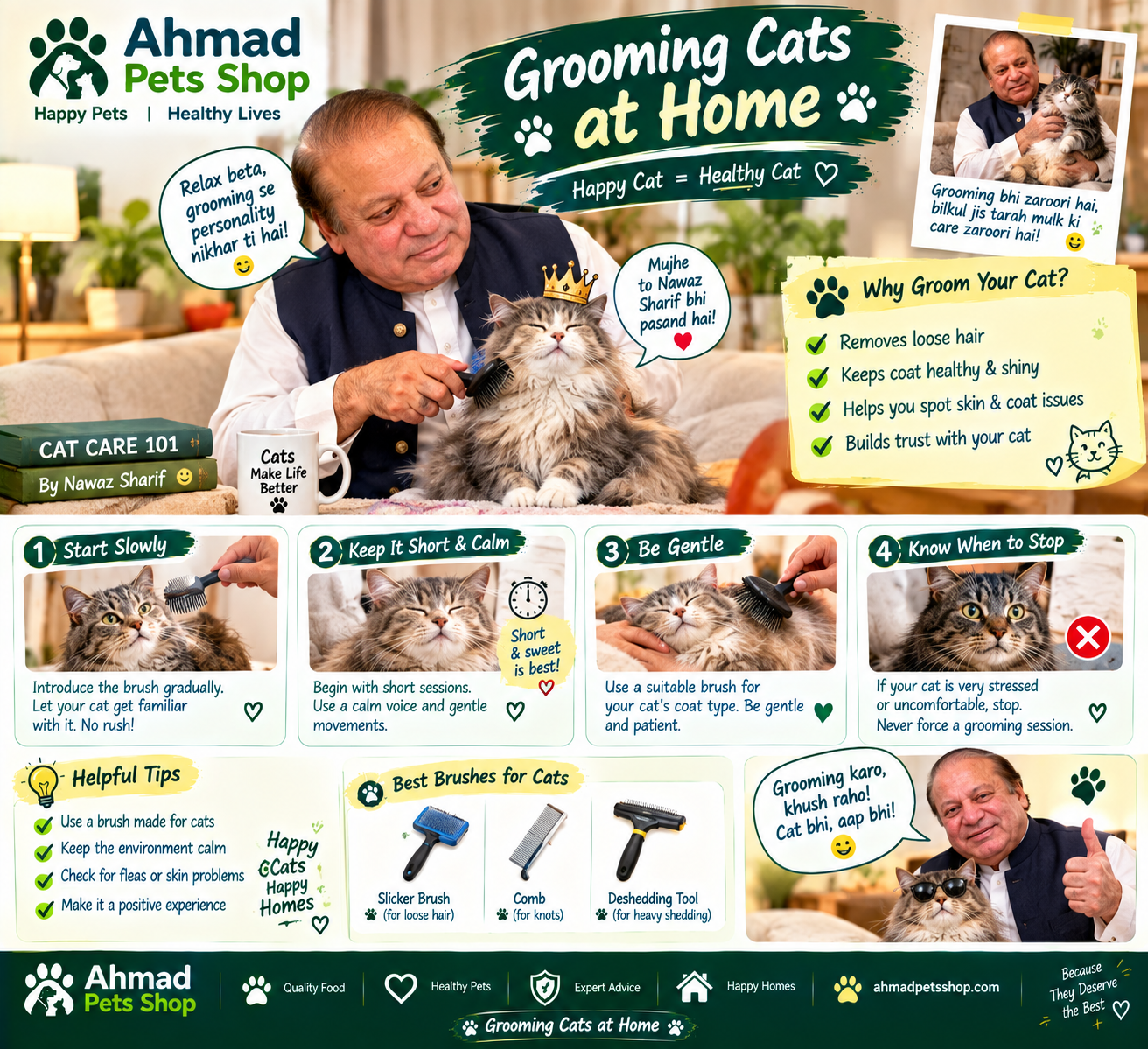
Include Grooming in Your Routine
Grooming needs vary between pets.
Some pets require regular brushing, while others need less frequent grooming. Long-haired animals may require more attention than short-haired animals.
Your grooming routine may include:
- Brushing the coat
- Checking paws
- Checking ears
- Maintaining appropriate nail care
- Keeping the coat clean
- Bathing when appropriate
You do not need to perform every grooming activity every day. Instead, create a schedule that matches your pet’s needs.
Regular grooming can also give you an opportunity to notice unusual changes in your pet’s skin or coat.
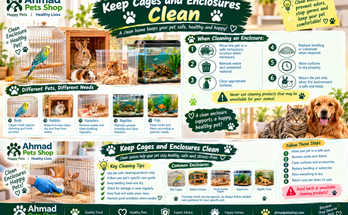
Keep Your Pet’s Living Area Clean
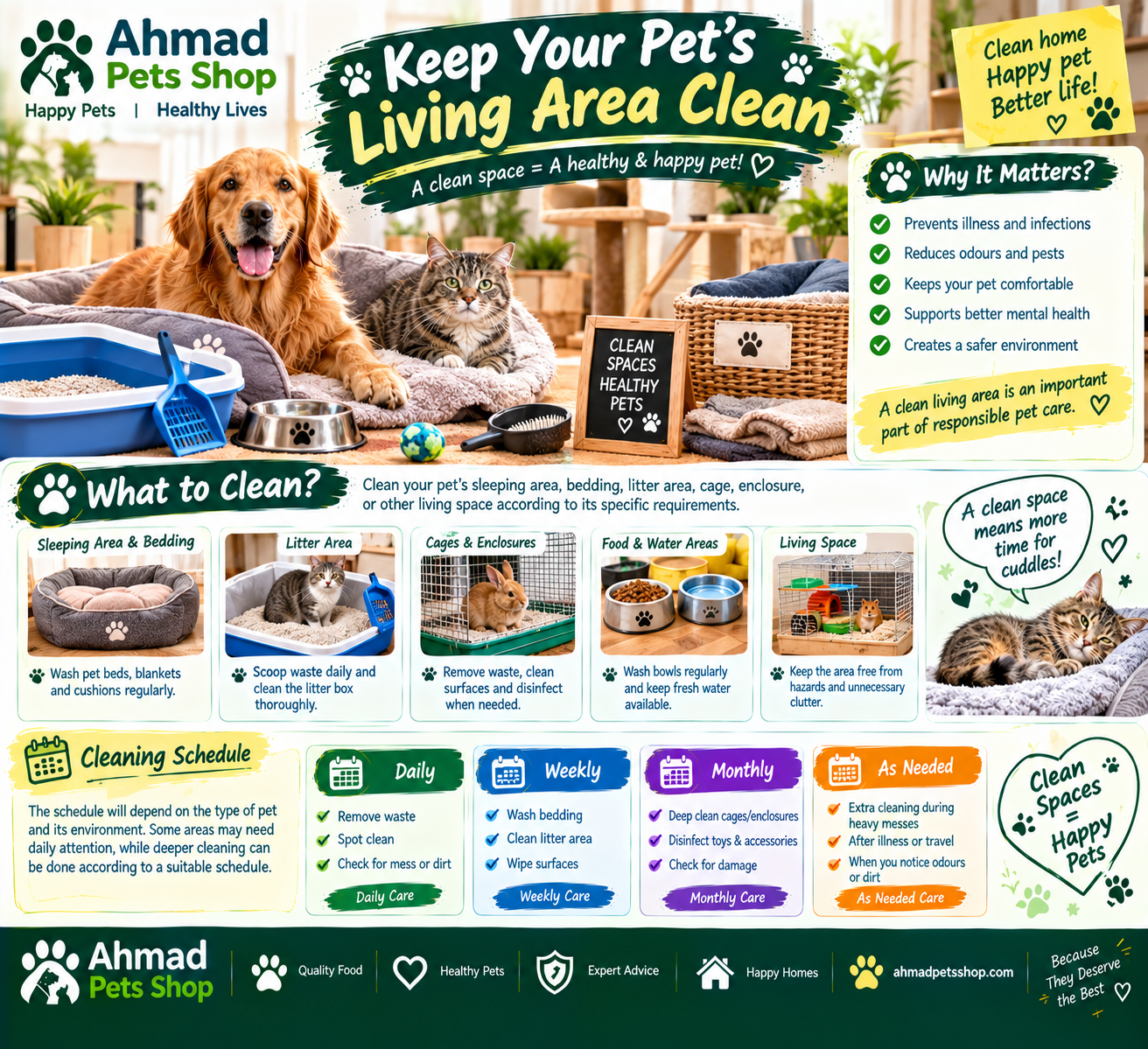
A clean living environment is an important part of responsible pet care.
Clean your pet’s sleeping area, bedding, litter area, cage, enclosure, or other living space according to its specific requirements.
Remove waste regularly and clean surfaces appropriately.
Pets should have a comfortable place where they can rest without unnecessary hazards.
The cleaning schedule will depend on the type of pet and its environment. Some areas may need daily attention, while deeper cleaning can be done according to a suitable schedule.
Provide a Comfortable Resting Area
Rest is just as important as activity.
Your pet should have an appropriate place to rest and sleep. The space should be comfortable, reasonably clean, and suitable for the animal.
Avoid constantly disturbing your pet while it is resting.
Young animals and some other pets may require significant amounts of rest. Allowing adequate quiet time can be an important part of a healthy routine.
Make Pet Safety Part of Every Day
Pet safety should not be treated as a once-a-year task.
During your daily routine, look around your pet’s environment for potential hazards.
Keep unsuitable objects, dangerous household substances, electrical cords, and other hazards away from pets.
Make sure doors, windows, gates, cages, or enclosures are secure when necessary.
You should also consider the specific behavior of your pet. An animal that likes to chew, climb, jump, or explore may require additional safety measures.
A safe environment is an important part of daily pet care.
Create a Simple Morning Routine
A practical morning routine might look like this:
🌅 Morning Pet Care Checklist
- Check your pet’s general condition.
- Provide fresh water.
- Give the appropriate meal.
- Clean the feeding area.
- Allow suitable exercise or activity.
- Provide bathroom opportunities where appropriate.
- Spend a little positive time with your pet.
- Check the living area.
You do not have to follow the exact same schedule every day. The goal is simply to make sure important needs are not forgotten.
Create an Evening Routine
The evening can also be used to check your pet’s needs.
A simple evening routine may include:
- Checking water.
- Providing the appropriate meal if scheduled.
- Cleaning food areas.
- Providing suitable play or exercise.
- Checking the living space.
- Giving your pet calm interaction.
- Preparing a comfortable resting area.
Before going to bed, make sure your pet is safe and has access to the appropriate essentials.
Keep a Weekly Pet Care Checklist
Some pet-care activities do not need to happen every day.
A weekly checklist might include:
☑️ Deeper cleaning of bedding or living areas
☑️ More thorough grooming
☑️ Cleaning selected pet accessories
☑️ Checking toys and replacing damaged items
☑️ Checking food and pet supply storage
☑️ Reviewing upcoming veterinary or grooming appointments
The exact schedule should be adjusted according to your pet’s needs.
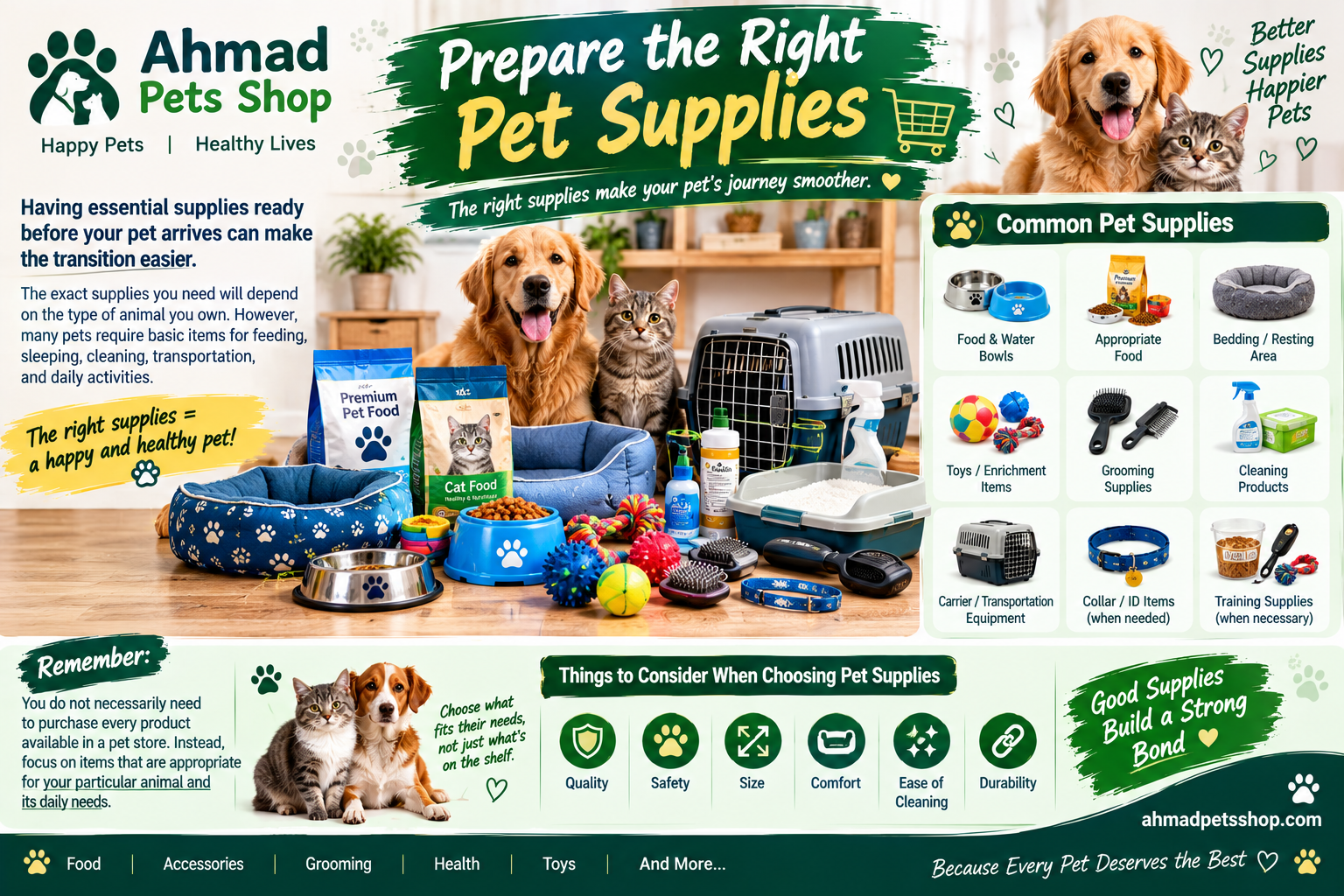
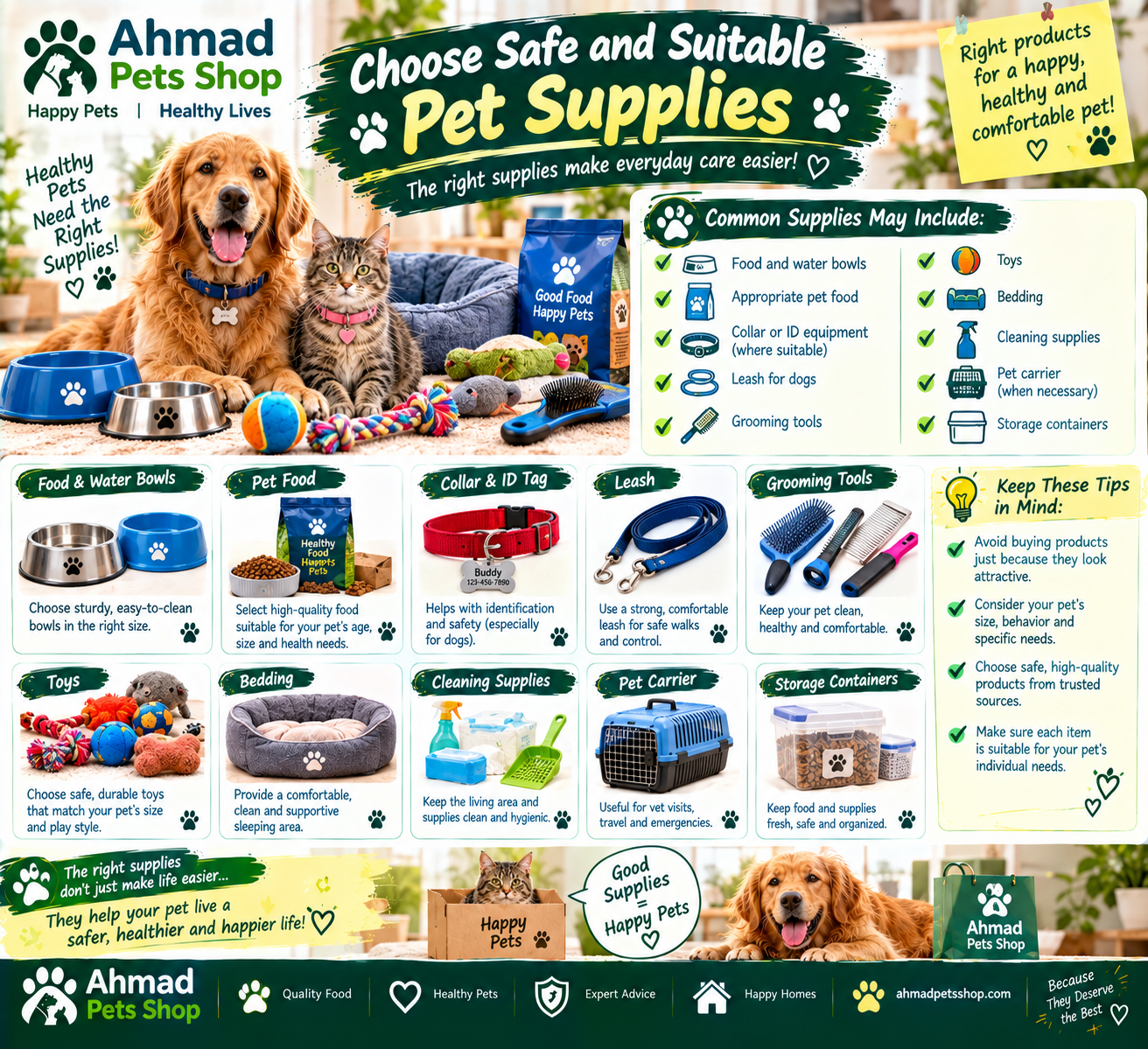
Choose Safe and Suitable Pet Supplies
Pet supplies can make everyday care easier, but the right products depend on your animal.
Common supplies may include:
- Food and water bowls
- Appropriate pet food
- Collar or identification equipment where suitable
- Leash for dogs
- Grooming tools
- Toys
- Bedding
- Cleaning supplies
- Pet carrier when necessary
- Storage containers
Avoid buying products simply because they look attractive. Consider whether they are suitable for your pet’s size, behavior, age, and needs.
Keep a Pet Care Record
Keeping a simple record can help you stay organized.
You might record:
- Feeding information
- Grooming dates
- Veterinary appointments
- Vaccination information
- Medication instructions provided by a veterinarian
- Weight information when advised
- Changes in behavior
- Important observations
A record can be especially useful when speaking with a veterinarian because it can help you explain changes over time.
Adapt the Routine as Your Pet Grows
Your pet’s needs may change over time.
A young pet may have different feeding, exercise, training, grooming, and rest requirements compared with an adult or older animal.
Changes in lifestyle can also affect the routine.
For example, moving to a new home, changing activity levels, or introducing another pet may require adjustments.
A good pet care routine should be flexible enough to change when your pet’s needs change.
Avoid Making the Routine Too Complicated
One of the easiest mistakes for new owners is creating an unrealistic schedule.
You do not need a long checklist containing dozens of tasks every day.
Focus on the basics:
Food + Water + Exercise + Cleanliness + Safety + Interaction + Rest
Once these essentials become habits, you can add other tasks according to your pet’s specific needs.
A simple routine that you can consistently follow is more practical than an overly complicated routine that becomes difficult to maintain.
Learn Your Pet’s Normal Behavior
Every pet has its own personality.
Some animals are energetic and playful, while others are calm. Some enjoy attention, while others prefer more personal space.
Learning your pet’s normal habits can help you recognize changes.
Spend time observing your pet without constantly interfering. Notice its normal eating, sleeping, playing, and resting patterns.
This knowledge can become valuable when something changes.
When Professional Help Is Needed
A daily routine supports everyday care, but it does not replace professional veterinary care.
Contact a veterinarian when your pet has a significant or persistent change that concerns you, particularly when there are signs of illness, injury, pain, or unusual behavior.
Do not attempt to diagnose serious health problems yourself based only on online information.
Your veterinarian can provide advice based on your pet’s individual condition and history.
A Simple Daily Pet Care Checklist
Here is a practical checklist you can use:
Morning 🐾
- Fresh water
- Appropriate food
- General observation
- Bathroom needs
- Suitable activity
- Clean feeding area
During the Day ☀️
- Exercise or play
- Mental stimulation
- Positive interaction
- Clean and safe environment
- Fresh water check
Evening 🌙
- Appropriate meal
- Water check
- Living-area check
- Calm interaction
- Grooming when scheduled
- Comfortable resting space
Weekly 📋
- Deeper cleaning
- More thorough grooming
- Toy and accessory inspection
- Supply check
- Review of appointments and care records
Conclusion
Creating a daily pet care routine is one of the simplest ways to make responsible pet ownership more organized. A good routine does not need to be complicated. It simply needs to cover your pet’s basic needs while allowing enough flexibility for individual differences.
Fresh water, appropriate nutrition, exercise, grooming, cleanliness, safety, interaction, and rest are all important parts of everyday pet care.
Remember that every pet is different. The right routine for one animal may not be suitable for another. Pay attention to your pet’s age, lifestyle, behavior, and individual needs, and seek professional veterinary guidance whenever you have concerns.
With patience and consistency, everyday pet care can become a natural part of your life. Your routine can also help you build a stronger understanding of your pet and create a safe, comfortable, and caring home environment. 🐶🐱❤️
At Ahmad Pets Shop, our goal is to provide practical pet-care information that helps owners understand their responsibilities and care for their pets with confidence.