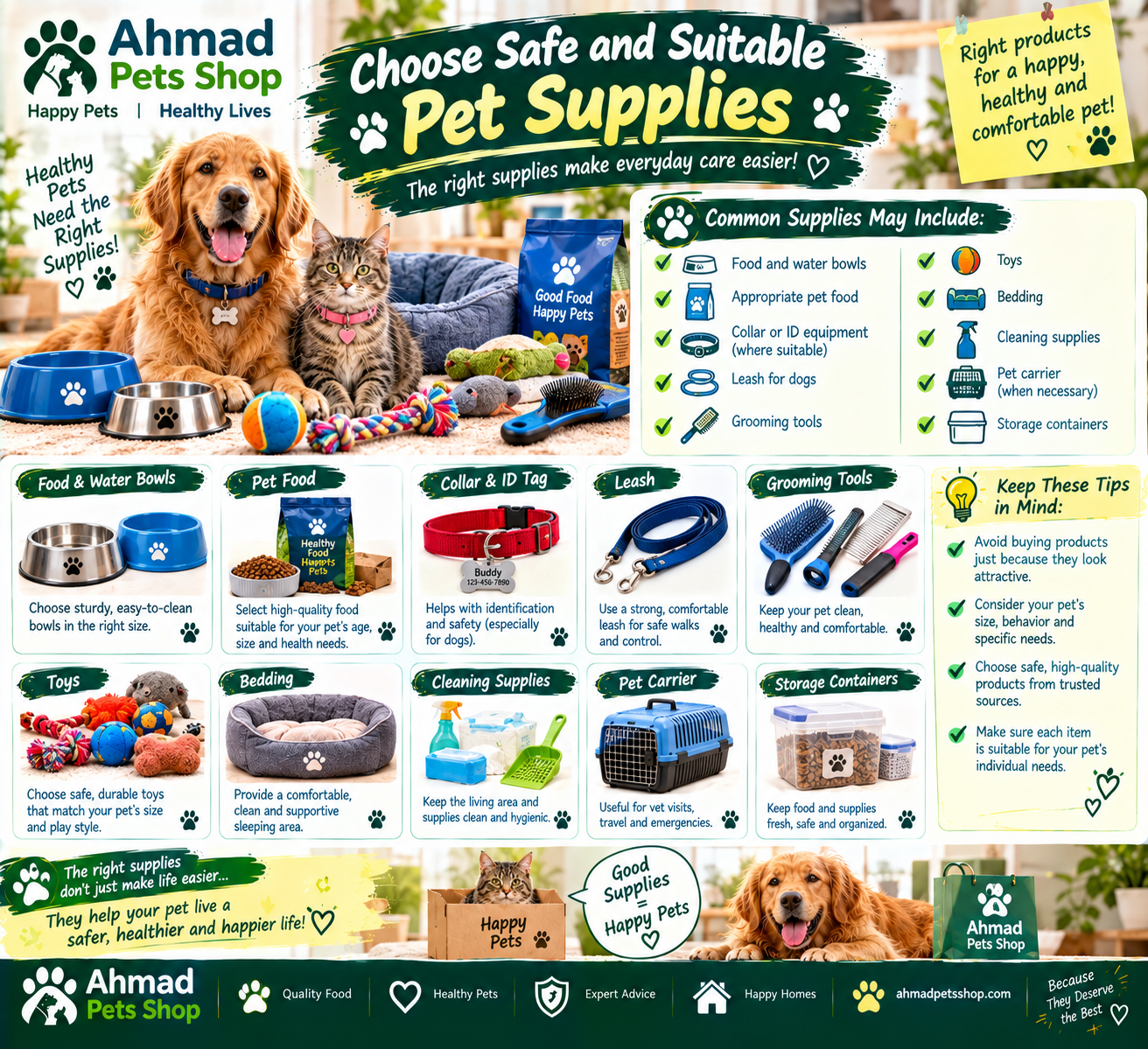
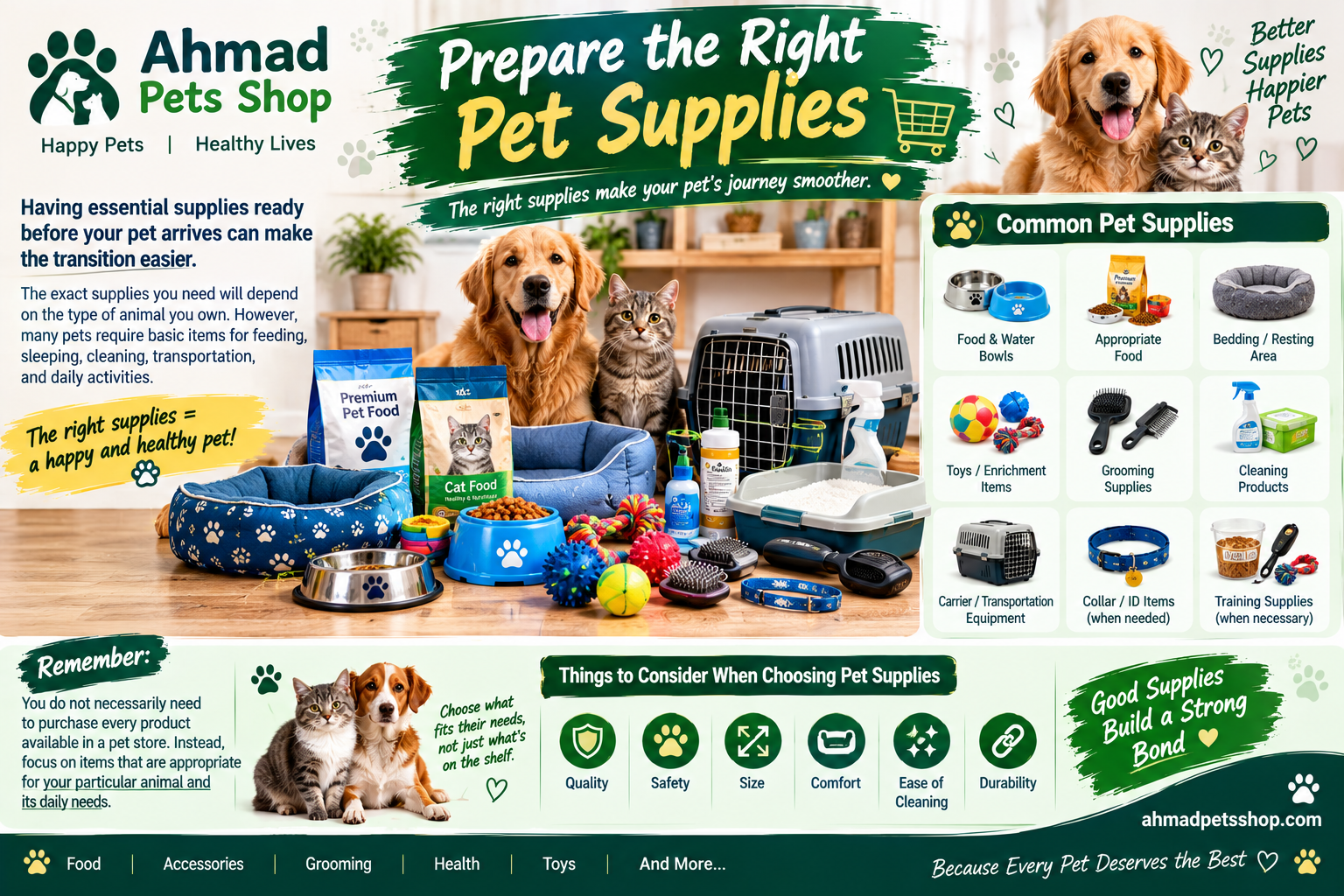
Pet toys are more than just objects that animals play with. The right toys can provide entertainment, encourage appropriate activity, support mental stimulation, and give pets a positive way to spend their energy. Choosing suitable toys is therefore an important part of responsible pet care.
However, not every toy is suitable for every pet. Different animals have different behaviors, sizes, activity levels, and preferences. A toy that works well for one pet may not be appropriate for another. Pet owners should consider safety, size, material, durability, and the way the toy will be used before making a choice.
Learning how to choose the right pet toys can help you create a more enjoyable and engaging environment for your pet. At Ahmad Pets Shop, we believe that understanding your pet’s needs is an important part of providing good everyday care. 🐾
This guide explains what pet owners should consider when choosing toys and how to use them responsibly.
Why Pet Toys Are Important
Play can be an important part of a pet’s daily routine. Depending on the animal, suitable toys can encourage movement, exploration, problem-solving, and interaction.
For dogs, toys may provide opportunities for chewing, fetching, carrying, or interactive play. Cats may enjoy toys that encourage chasing, batting, climbing, or exploring. Other pets may have completely different preferences.
Toys can also help prevent boredom by giving pets something appropriate to interact with.
A good toy should be considered part of a broader pet care routine that includes appropriate food, fresh water, exercise, rest, grooming, safety, and positive interaction.
Consider Your Pet’s Type
The first step in choosing a toy is to think about the type of pet you have.
Dogs, cats, rabbits, birds, and other companion animals can have very different needs.
For example, a dog may enjoy a durable toy designed for chewing, while a cat may prefer a lightweight toy that encourages chasing or batting.
Always select products designed for the specific type of animal whenever possible.
Consider Your Pet’s Size
Toy size is an important safety consideration.
A toy should be appropriate for your pet’s size and behavior. A toy that is too small may create a safety concern for some animals, while a toy that is too large may be difficult for a smaller pet to use comfortably.
When buying toys, check the manufacturer’s size recommendations and consider your pet’s individual behavior.
If your pet tends to chew aggressively, pay particular attention to the toy’s construction and suitability.
Think About Your Pet’s Age
Age can also influence toy selection.
Young pets may enjoy toys that encourage exploration and appropriate play. Adult pets may have different preferences depending on their activity level and personality.
Older pets may benefit from toys that are easier to handle and suitable for their comfort level.
The important point is to choose toys according to your pet’s current needs rather than assuming that one type of toy will always be appropriate.
Choose Toys Based on Your Pet’s Personality
Every pet has its own personality.
Some pets enjoy chasing objects. Others prefer chewing, carrying, exploring, or solving simple challenges.
Spend time observing what your pet naturally enjoys.
For example:
- Active pets may enjoy movement-based toys.
- Curious pets may enjoy interactive toys.
- Chewers may prefer suitable durable toys.
- Pets that enjoy fetching may like balls or fetch toys.
- Pets that enjoy exploration may benefit from toys that encourage investigation.
Understanding your pet’s preferences can help you choose toys that are more likely to be used.
Interactive Pet Toys
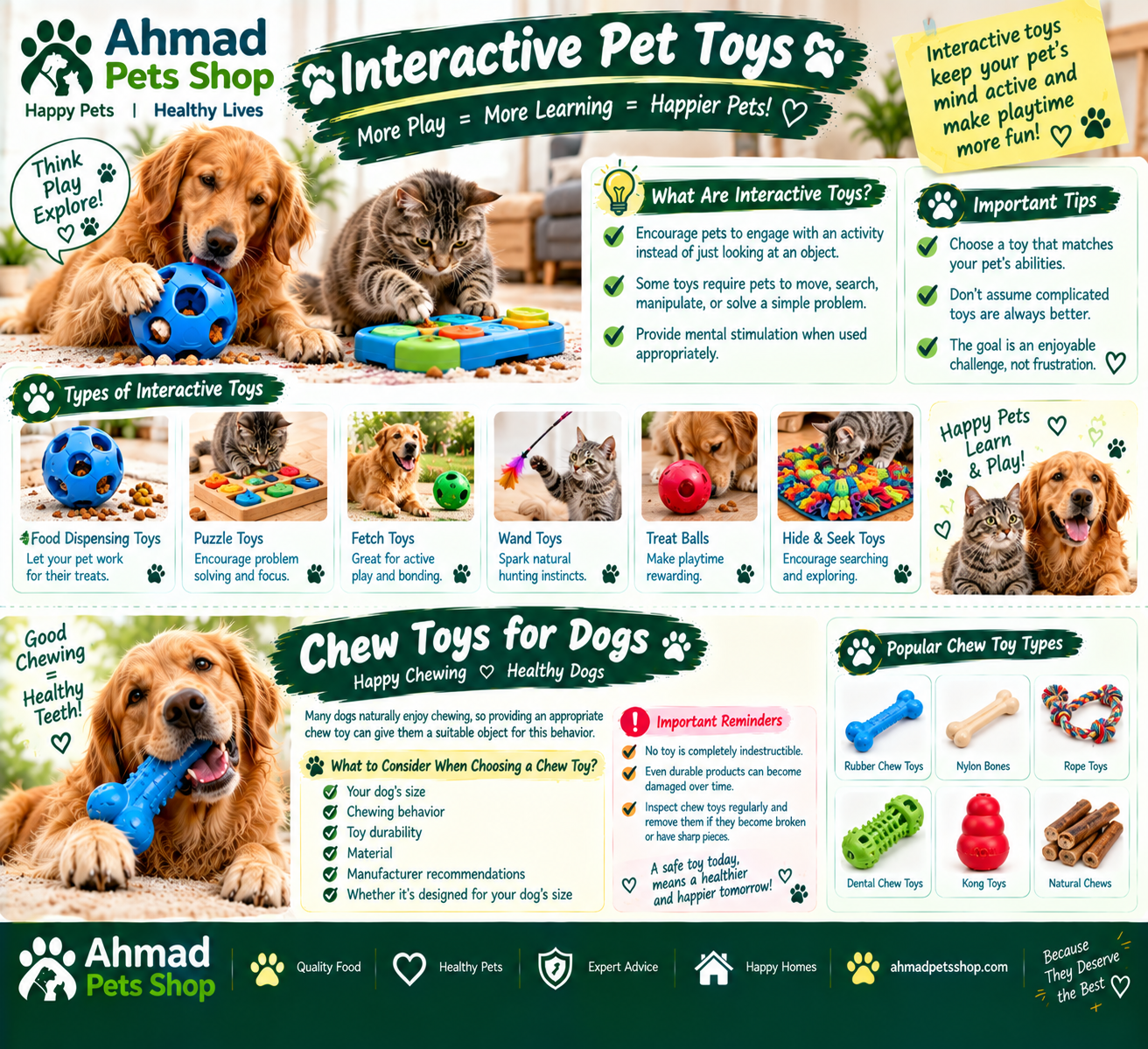
Interactive toys can encourage pets to engage with an activity rather than simply looking at an object.
Some interactive toys require pets to move, search, manipulate, or solve a simple problem.
These toys can be useful for providing mental stimulation when used appropriately.
However, always choose an interactive toy that is suitable for your pet’s abilities. Do not assume that a complicated toy is automatically better.
The goal is to create an enjoyable challenge, not unnecessary frustration.
Chew Toys for Dogs
Many dogs naturally enjoy chewing, so providing an appropriate chew toy can give them a suitable object for this behavior.
When choosing a chew toy, consider:
- Your dog’s size
- Chewing behavior
- Toy durability
- Material
- Manufacturer recommendations
- Whether the toy is designed for your dog’s size
No toy is completely indestructible. Even durable products can become damaged over time.
Inspect chew toys regularly and remove them if they become broken or unsafe.
Balls and Fetch Toys
Many dogs enjoy playing fetch, making balls and suitable fetch toys popular choices.
Choose a size that your dog can safely handle and follow product recommendations.
Avoid using random household objects as substitutes for pet toys if they could break, splinter, become stuck, or contain unsuitable materials.
During outdoor play, make sure the environment is safe and appropriate.
Fetch should be an enjoyable activity rather than a reason to encourage excessive physical activity.
Toys for Cats
Cats often have different play preferences from dogs.
Some cats enjoy toys that move quickly across the floor. Others enjoy toys that encourage stalking, batting, chasing, or climbing.
Common cat toy categories include:
- Interactive toys
- Lightweight toys
- Balls
- Wand-style toys
- Puzzle toys
- Toys designed for chasing
Always supervise toys that contain strings, small pieces, or other components that could become unsafe if damaged or swallowed.
When play is finished, store potentially risky toys safely.
Puzzle and Food-Related Toys
Some toys combine play with food or treats.
These products can encourage pets to work for a small reward and may provide mental stimulation.
If you use food-based toys, make sure the treats or food are appropriate for your pet’s diet.
You should also consider the amount of food being provided. Treats should not unnecessarily replace a balanced diet.
Clean food-related toys regularly to reduce the buildup of food residue.
Toy Materials Matter
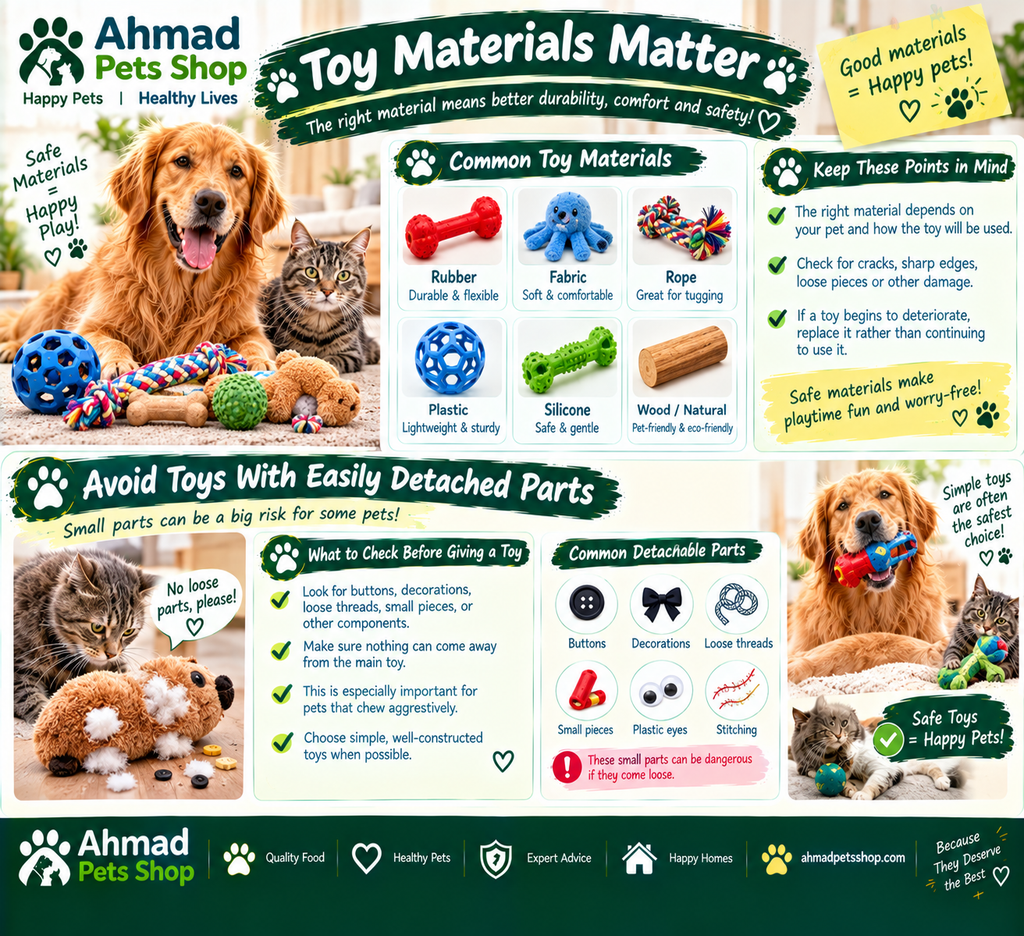
The material of a toy can affect its durability, comfort, and suitability.
Common materials include:
- Rubber
- Fabric
- Rope
- Plastic
- Silicone
- Wood or natural materials designed specifically for pets
The appropriate material depends on the animal and how the toy will be used.
Always inspect toys for cracks, sharp edges, loose pieces, or other damage.
If a toy begins to deteriorate, replace it rather than continuing to use it.
Avoid Toys With Easily Detached Parts
Small detachable components can become a concern for some pets.
Before giving a new toy to your pet, inspect it carefully. Look for buttons, decorations, loose threads, small pieces, or other components that could come away from the main toy.
This is particularly important for pets that chew aggressively.
Choose simple, appropriately constructed toys when possible.
Supervise Play When Necessary
Not every toy should be left with a pet without supervision.
Some toys may be suitable only for interactive play. Others may be designed for independent use but should still be checked regularly.
Supervision allows you to notice when:
- The toy becomes damaged.
- Your pet is using it incorrectly.
- Small pieces become detached.
- Your pet shows signs of frustration.
- The toy is no longer suitable.
When in doubt, follow the manufacturer’s instructions and use your judgment based on your pet’s behavior.
Inspect Toys Regularly
A toy can be safe when new but become unsuitable after repeated use.
Make toy inspection part of your regular pet care routine.
Look for:
- Cracks
- Tears
- Loose stitching
- Broken pieces
- Sharp edges
- Missing components
- Excessive wear
- Changes in shape
Replace damaged toys promptly.
Do not wait for a toy to completely fall apart before deciding that it needs replacement.
Keep Toys Clean
Pet toys can collect dirt, saliva, food particles, hair, and dust.
Wash toys according to the manufacturer’s instructions.
Fabric toys may require different cleaning methods from rubber or plastic toys.
Food-related toys should receive particular attention because leftover food can remain inside small areas.
Clean toys regularly and allow them to dry properly before returning them to your pet.
🧼 Simple tip: Add toy cleaning to your weekly pet-care checklist.
Rotate Your Pet’s Toys
You do not necessarily need to give your pet every toy at the same time.
Rotating toys can make familiar items feel interesting again.
For example, you can keep some toys available while storing others safely. After a period of time, switch them.
This can help keep playtime varied without constantly purchasing new products.
Always make sure stored toys are clean and in good condition before giving them back to your pet.
Don’t Choose a Toy Only Because It Looks Good
Bright colors, interesting designs, and attractive packaging can make a toy look appealing to owners.
However, appearance should not be the main factor when selecting a product.
Ask:
Is it suitable for my pet?
Is the size appropriate?
Is the material suitable?
Can my pet use it safely?
Is it designed for the type of play my pet enjoys?
These questions are more useful than simply choosing the most attractive product.
Consider Durability
Durability is particularly important for pets that chew or play actively.
However, remember that the word “durable” does not mean indestructible.
Even strong toys can eventually wear down.
Choose products appropriate for your pet’s behavior and inspect them regularly.
If your pet destroys toys quickly, consider discussing suitable options with a veterinarian or professional pet-care specialist.
Avoid Using Unsafe Household Objects
It can be tempting to give pets ordinary household objects as toys.
However, many household items are not designed for animals and may contain materials, small components, sharp edges, or other features that are unsuitable.
Pet-specific products are generally designed with animal use in mind.
If you are unsure whether an object is safe as a toy, it is better not to use it.
Use Toys as Part of Exercise
Toys can support physical activity when used appropriately.
For dogs, fetch and interactive play can encourage movement. For cats, chasing and batting activities may provide opportunities for activity.
However, toys should complement—not replace—the pet’s overall exercise needs.
The appropriate amount of activity depends on your pet’s age, health, breed or type, and individual needs.
Avoid forcing a pet to continue playing when it appears tired, uncomfortable, or uninterested.
Use Toys for Mental Stimulation
Mental stimulation is another reason to include toys in a pet’s environment.
Puzzle toys, interactive activities, and exploration-based games can encourage pets to think and engage with their surroundings.
Mental stimulation can be especially useful when outdoor activity is temporarily limited, although it should not be considered a complete replacement for appropriate exercise.
Different pets enjoy different challenges, so start with simple activities and observe how your pet responds.
Teach Children How to Use Pet Toys Safely
If children live in the home, teach them how to interact appropriately with pets during play.
Children should understand that pets are living animals and may become uncomfortable if play is too rough.
Show children how to:
- Use toys appropriately.
- Avoid pulling toys aggressively.
- Give pets space when they want to rest.
- Avoid taking food or toys away unnecessarily.
- Ask an adult for help if a toy becomes damaged.
Supervision is especially important when young children and pets are playing together.
Store Pet Toys Properly
When toys are not being used, store them in a clean and organized place.
Keep toys away from moisture, excessive heat, and areas where they could become dirty.
Separate clean toys from damaged items.
A simple storage basket or container can make it easier to organize your pet’s belongings.
Good storage also makes regular toy inspection and cleaning easier.
Create a Simple Toy Routine
A simple routine can help you get more value from your pet’s toys.
Daily 🐾
Provide appropriate play and interaction.
Weekly 🧼
Inspect and clean toys.
Regularly 🔍
Remove damaged or worn-out products.
Occasionally 🔄
Rotate toys to provide variety.
This approach keeps pet play organized without making it unnecessarily complicated.
When to Replace a Pet Toy
Replace a toy when it becomes damaged or when its condition changes enough that it may no longer be suitable.
Signs that a toy needs replacement can include:
- Large tears
- Broken pieces
- Loose components
- Sharp edges
- Missing sections
- Excessive wear
- Significant changes in shape
If you are unsure about a toy’s condition, choose safety over convenience and replace it.
Build a Balanced Play Environment
A pet does not need dozens of toys.
A small selection of suitable toys can provide variety while remaining easier to clean, inspect, and organize.
For example, a pet may have:
- One or two interactive toys
- A suitable chew or activity toy
- A movement-based toy
- A comfortable toy
- A puzzle or enrichment toy when appropriate
The exact combination depends on the animal.
The goal is quality, suitability, and variety rather than quantity.
Conclusion
Learning how to choose the right pet toys can help you create a safer and more enjoyable environment for your pet. The best choice depends on your pet’s type, size, age, personality, activity level, and natural behaviors.
Always consider the toy’s material, size, construction, and intended use. Inspect toys regularly, clean them appropriately, and replace damaged products.
Remember that toys are only one part of responsible pet ownership. Good nutrition, fresh water, exercise, grooming, safety, veterinary care, rest, and positive interaction are equally important.
With thoughtful choices and regular supervision, pet toys can become a useful part of your pet’s everyday routine. 🐶🐱🐾
At Ahmad Pets Shop, we aim to provide practical and easy-to-understand information for pet owners who want to make everyday pet care more organized and responsion