Whether you have a dog, cat, rabbit, bird, or another companion animal, the right cleaning routine depends on the type of pet and the environment in which it lives. Bedding, food bowls, toys, litter areas, cages, crates, and other pet spaces may all require regular attention.
Learning how to keep your pet’s living space clean and comfortable can make everyday pet care easier. A simple cleaning schedule can also help you notice damaged items, unusual messes, or changes in your pet’s normal habits.
At Ahmad Pets Shop, we believe that a comfortable environment is an important part of good pet care. 🐾 This guide explains practical ways to organize, clean, and maintain your pet’s living space.
Why a Clean Pet Environment Matters
Pets interact with their surroundings every day. Their sleeping area, food space, toys, and activity areas can collect hair, dust, food particles, dirt, and other debris.
A regular cleaning routine helps keep the environment organized and comfortable.
Cleaning also gives pet owners an opportunity to inspect the area. While cleaning, you may notice a damaged toy, broken bedding, spilled food, or another issue that needs attention.
A clean environment is only one part of responsible pet ownership, but it can make daily care easier and more enjoyable for both pets and owners.
Create a Dedicated Pet Area
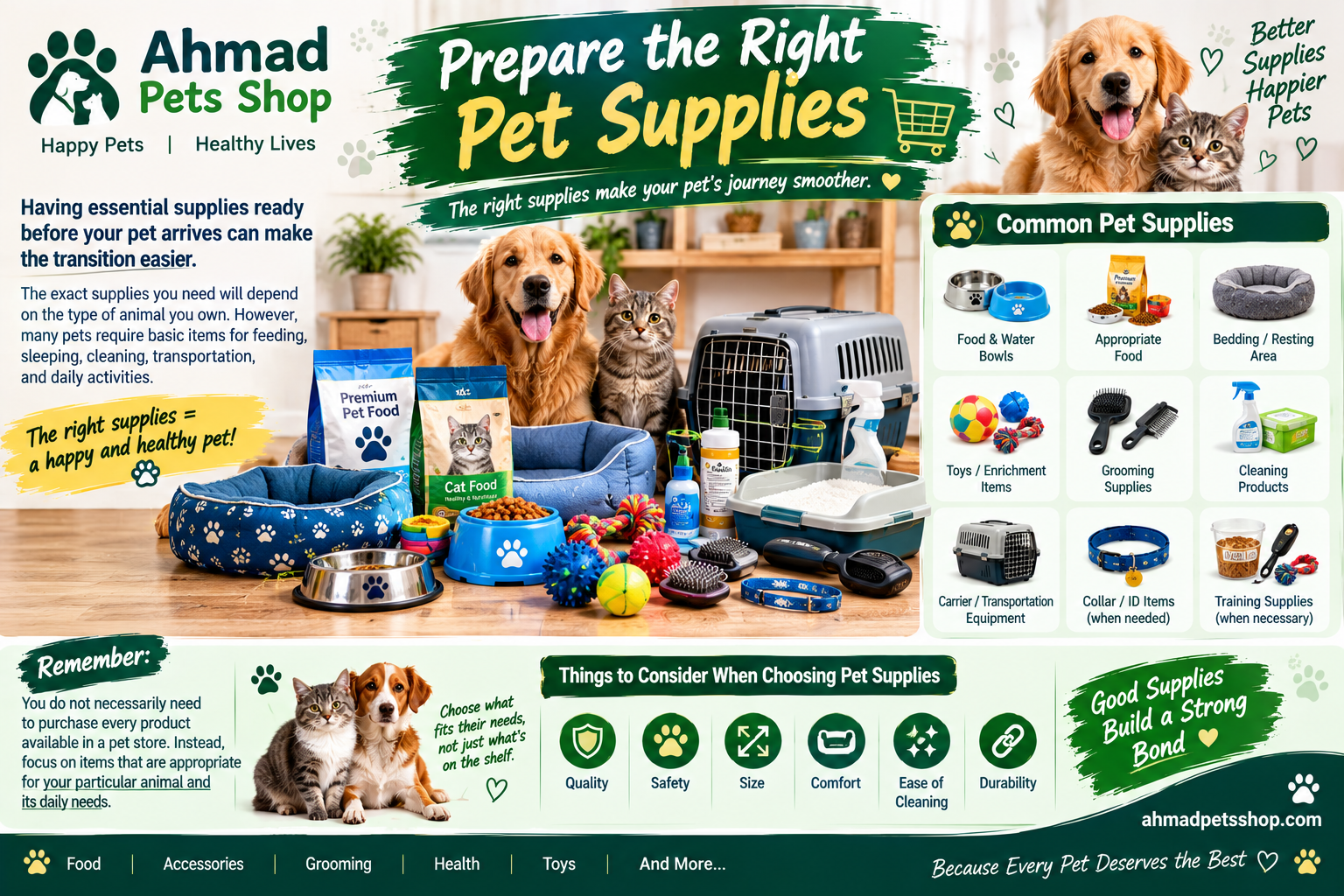
If possible, create a specific area for your pet’s belongings.
This could include:
- A sleeping area
- Food and water bowls
- Toys
- Grooming supplies
- Bedding
- Cleaning supplies
- A carrier or crate when appropriate
Keeping these items organized makes it easier to find what you need and maintain a consistent pet cleaning routine.
The space should be appropriate for your pet and should not contain unnecessary hazards.
Keep Bedding Clean
Pet bedding can collect loose hair, dirt, dust, and other debris.
Wash or clean bedding according to the manufacturer’s instructions and your pet’s needs.
Before returning bedding to your pet, make sure it is properly dried.
Check bedding regularly for:
- Tears
- Loose threads
- Excessive wear
- Unpleasant odors
- Damaged filling
- Other signs that replacement may be needed
If bedding becomes badly damaged, replacing it may be more appropriate than continuing to use it.
Clean Food and Water Bowls
Food and water bowls are used regularly, so they should receive regular attention.
Food particles can remain inside bowls after meals, while water bowls can collect dust, hair, or other debris.
Wash bowls appropriately and keep the surrounding feeding area clean.
When choosing bowls, consider materials that are suitable for pets and easy to clean.
A simple habit of checking the feeding area after meals can make your overall pet care routine easier.
Keep the Feeding Area Organized
Food should be stored appropriately and away from places where pets cannot access it safely.
Keep the feeding area free from unnecessary clutter.
Clean spilled food promptly and check the surrounding floor for crumbs or other debris.
If your pet eats in a specific location, regular cleaning of that area can become part of your daily routine.
Clean Pet Toys Regularly
Pet toys can collect saliva, hair, dirt, food particles, and dust.
The cleaning method depends on the type of toy.
Some toys may be washable, while others may require simple surface cleaning. Always follow the manufacturer’s care instructions when available.
During cleaning, inspect toys for damage.
Look for:
- Cracks
- Tears
- Loose stitching
- Broken pieces
- Sharp edges
- Missing parts
If a toy is damaged and may no longer be suitable, replace it.
You can learn more about choosing suitable toys in our guide on how to choose the right pet toys.
Keep Crates and Carriers Clean
Crates and carriers can become dirty through regular use, especially when pets travel outdoors or spend time inside them.
Clean these spaces regularly according to the material and manufacturer’s recommendations.
Remove loose hair and visible dirt, and wash removable bedding when appropriate.
Before placing your pet inside a carrier, make sure it is clean, dry, and suitable for the intended use.
A clean carrier can also make future travel easier.
Maintain Litter Areas Properly
Cats and certain other pets may use designated litter or waste areas.
These areas require regular cleaning.
Remove waste according to an appropriate schedule and keep the surrounding area clean.
The litter material should be suitable for the animal and changed according to its instructions and your pet’s needs.
If your pet suddenly changes its normal bathroom habits, do not assume that cleaning alone will solve the problem. Significant or persistent changes should be discussed with a veterinarian.
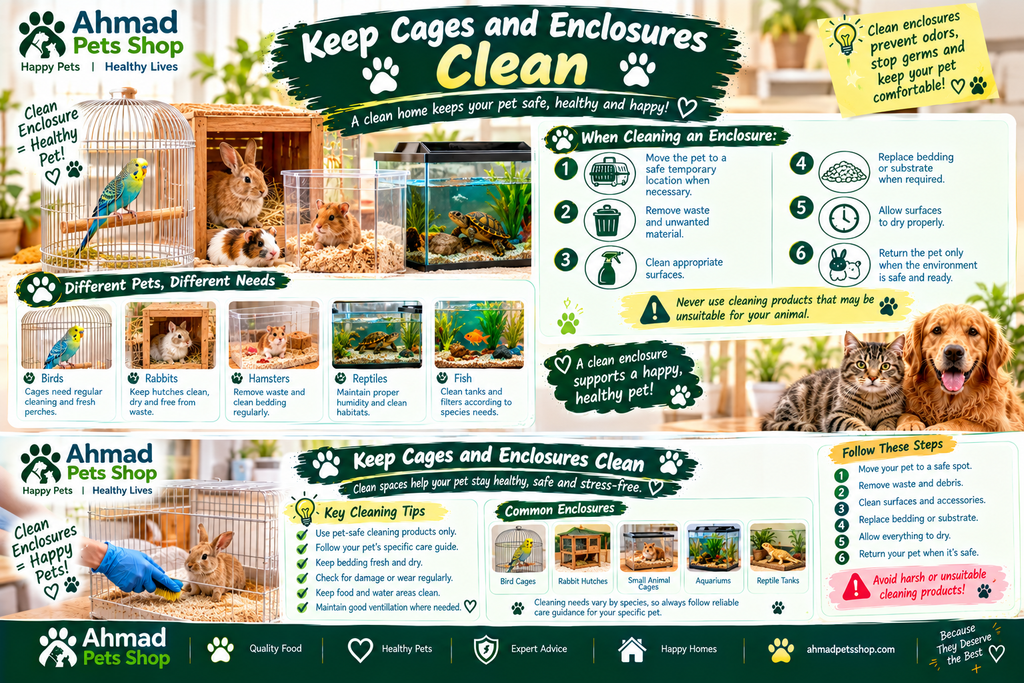
Keep Cages and Enclosures Clean
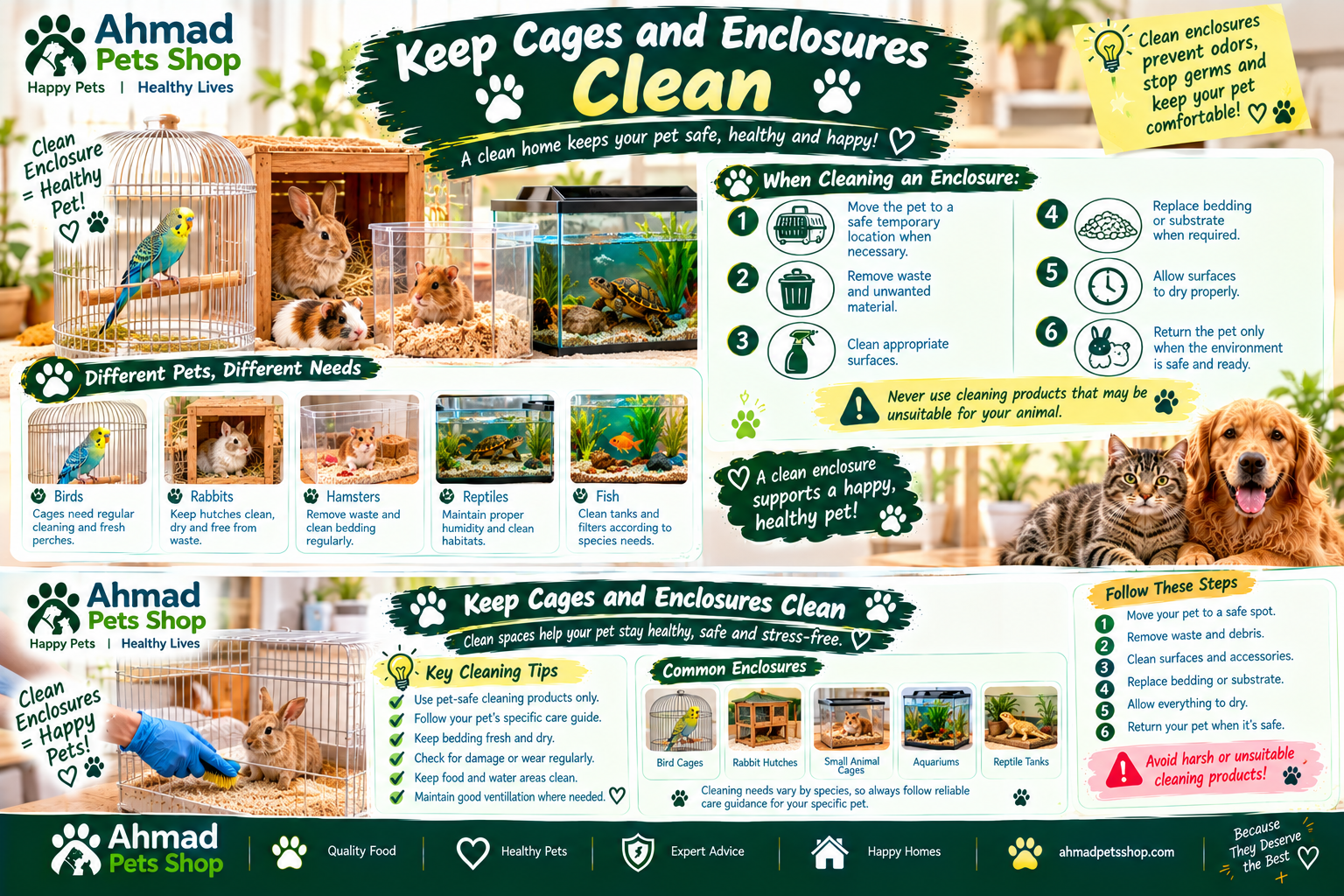
Some pets live in cages, tanks, hutches, or other enclosed environments.
The cleaning requirements depend heavily on the type of animal.
For example, birds, rabbits, hamsters, and other small animals can have different housing requirements.
Follow reliable care guidance appropriate for your specific pet.
When cleaning an enclosure:
- Move the pet to a safe temporary location when necessary.
- Remove waste and unwanted material.
- Clean appropriate surfaces.
- Replace bedding or substrate when required.
- Allow surfaces to dry properly.
- Return the pet only when the environment is safe and ready.
Never use cleaning products that may be unsuitable for your animal.
Choose Pet-Safe Cleaning Products
Not every household cleaning product is appropriate for use around pets.
Before using a cleaning product in an area where your pet lives, check the product instructions and whether it is suitable for that purpose.
Keep cleaning products stored securely away from animals.
Never allow your pet to access bottles, containers, concentrated cleaning products, or other household chemicals.
If you are uncertain about a product, ask a veterinarian or follow guidance from a reliable pet-care professional.
Avoid Strong Unnecessary Fragrances
Pets have different senses and may respond differently to strong smells.
A pet’s environment does not need to smell heavily perfumed to be clean.
Focus on proper cleaning rather than trying to cover odors with strong fragrances.
If your pet seems uncomfortable around a particular product or smell, remove the source and seek appropriate advice if the issue continues.
Keep Floors and Activity Areas Clean
Floors can collect hair, dirt, food particles, and outdoor debris.
Regularly clean the areas where your pet spends time.
If your pet comes inside after outdoor activity, check its paws and coat when appropriate.
Cleaning frequently used areas can be especially helpful for households with pets that spend time both indoors and outdoors.
Create a Simple Daily Cleaning Routine
You do not need to spend hours cleaning your pet’s entire environment every day.
A simple daily routine can include:
🧹 Removing visible dirt
💧 Checking and refreshing water
🍽️ Cleaning food areas
🧸 Checking toys
🛏️ Checking bedding
🐾 Checking the pet’s main living area
Small tasks completed regularly can prevent messes from becoming more difficult to manage.
Create a Weekly Cleaning Schedule
Some tasks may only need to be completed weekly or according to the specific needs of your pet.
Your weekly routine might include:
- Washing bedding
- Cleaning toys
- Cleaning feeding areas thoroughly
- Organizing pet supplies
- Inspecting crates or carriers
- Cleaning activity areas
- Checking storage containers
The exact schedule depends on your pet and its environment.
Keep Wet Areas Dry
Moisture can make some pet areas uncomfortable and may contribute to unpleasant odors.
After cleaning, allow appropriate surfaces to dry properly before allowing your pet to use them.
Check water bowls and areas around drinking stations for spills.
If bedding becomes wet, replace or dry it appropriately.
Keeping the environment reasonably dry is an important part of maintaining a comfortable living space.
Store Pet Supplies Correctly
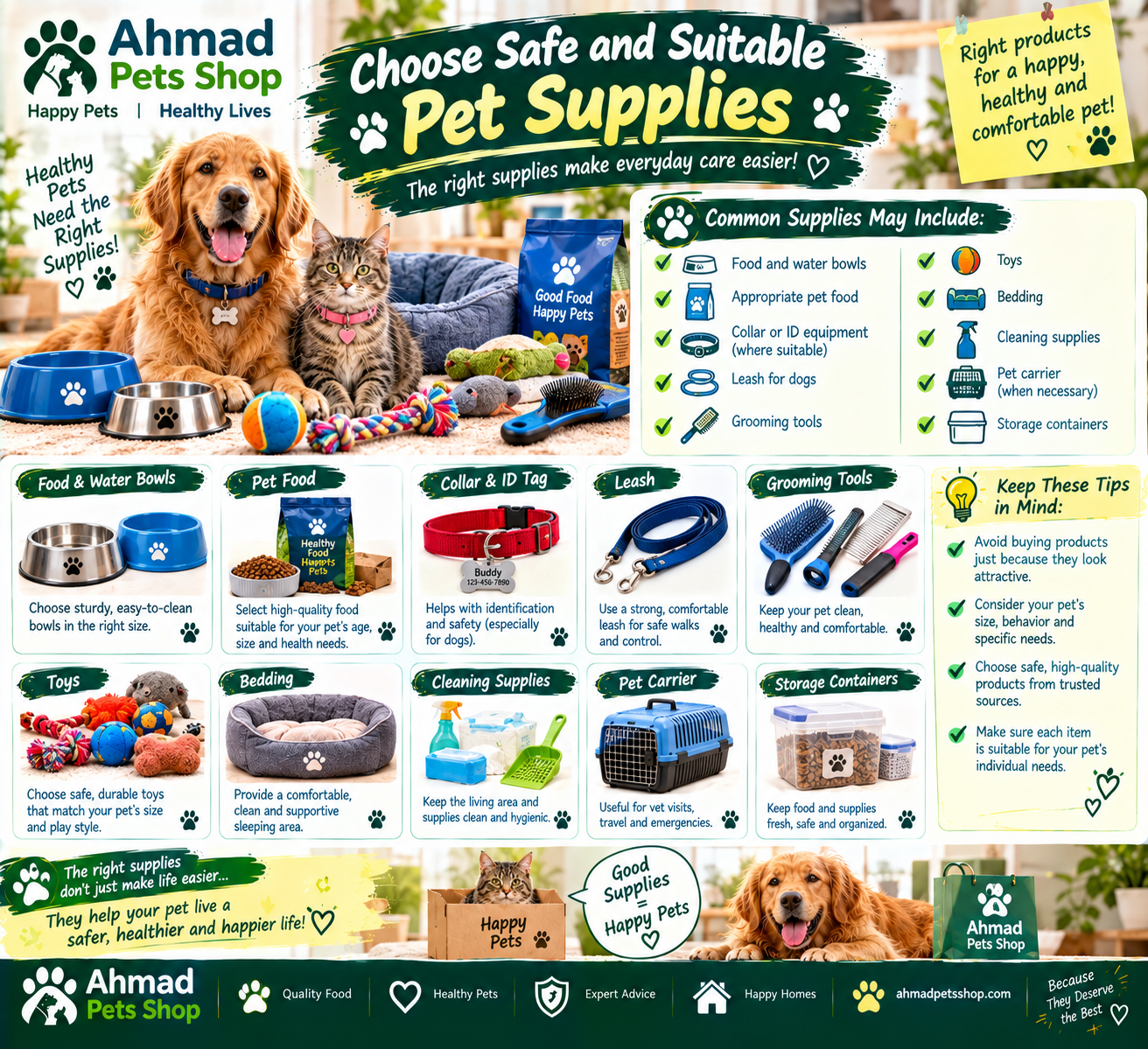
Pet food, treats, toys, grooming supplies, and other items should be stored in suitable locations.
Keep food in appropriate containers and follow storage instructions on the packaging.
Do not leave food where your pet can access it without supervision if doing so could lead to overeating or other problems.
Keep grooming and cleaning products away from pets.
An organized storage system can make your pet care routine more efficient.
Check for Damaged Furniture and Accessories
Pets may scratch, chew, climb, or interact with household furniture and accessories.
Regularly check their environment for damage.
Look for:
- Exposed sharp edges
- Loose pieces
- Damaged bedding
- Broken containers
- Loose wires
- Unstable accessories
- Other hazards
Fix or remove unsafe items promptly.
Pet-proofing is an ongoing process because pets can change their behavior as they grow.
Make the Space Comfortable
Cleanliness is important, but comfort matters too.
Your pet should have an appropriate place to rest and feel secure.
Depending on the animal, this may include:
- Comfortable bedding
- Suitable hiding areas
- Appropriate toys
- Access to fresh water
- A quiet resting location
- Suitable temperature and ventilation
The ideal environment varies by species and individual needs.
Avoid making assumptions based on what works for another animal.
Give Your Pet Enough Personal Space
Pets may need quiet areas where they can rest without constant disturbance.
If you have multiple pets, make sure each animal has appropriate space and access to necessary resources.
Some animals prefer privacy while resting or eating.
Learning your pet’s behavior can help you understand when it wants interaction and when it needs quiet time.
Keep Outdoor Areas Clean
If your pet spends time in a garden, yard, balcony, or other outdoor area, that space also needs attention.
Check the area regularly for objects that could be unsafe.
Remove waste promptly and keep the space reasonably clean.
Make sure gates, fences, or barriers are secure when necessary.
Outdoor areas should be suitable for the type of pet using them.
Clean Up After Outdoor Activities
Pets can bring dirt, mud, leaves, and other material indoors after spending time outside.
A simple post-outdoor routine can help.
You might:
- Check your pet’s paws.
- Remove visible dirt when appropriate.
- Check the coat.
- Clean any muddy areas.
- Return outdoor accessories to their proper place.
This can reduce the amount of dirt brought into the home.
Keep Grooming Supplies Organized
Grooming tools should be stored in a clean and accessible location.
These may include:
- Brushes
- Combs
- Towels
- Nail-care tools
- Pet-safe cleaning items
Clean grooming tools according to their material and use.
Keeping them organized means you can quickly access what you need during your regular pet grooming routine.
Make Cleaning a Family Responsibility
If several people live in the household, pet-care responsibilities can be shared.
One person might handle feeding, another might clean bowls, and another might help maintain bedding or toys.
Children can participate in age-appropriate tasks under adult supervision.
Teaching family members about pet care can help create a consistent routine.
Watch for Unusual Odors or Messes
Sometimes an unusual odor or repeated mess can indicate that something has changed.
Do not simply cover an unusual smell with air fresheners.
Instead, look for the source.
If the issue is related to your pet’s health or behavior, professional veterinary advice may be appropriate.
Regular cleaning makes it easier to notice changes because you become familiar with what is normal for your pet’s environment.
Avoid Over-Cleaning With Unsuitable Products
Keeping a pet’s environment clean is important, but more cleaning is not always better if unsuitable products are being used.
Follow appropriate instructions for cleaning products and your pet’s living environment.
Avoid exposing animals unnecessarily to strong chemicals or products that are not designed for use around pets.
When caring for specialized animals, follow species-specific housing and hygiene guidance.
Build a Practical Pet Cleaning Checklist
A simple checklist can help you stay organized.
Every Day 🐾
- Check food and water areas.
- Remove visible waste.
- Check the sleeping area.
- Inspect commonly used toys.
- Clean obvious spills.
- Check the general environment.
Every Week 🧼
- Wash appropriate bedding.
- Clean suitable toys.
- Organize pet supplies.
- Inspect crates or carriers.
- Clean frequently used areas thoroughly.
Regularly 🔍
- Replace damaged items.
- Review storage of food and supplies.
- Check outdoor areas.
- Review your pet’s overall living environment.
Adjust the schedule based on your pet’s individual needs.
Keep Your Pet’s Environment Safe
A clean environment should also be a safe environment.
During cleaning, check for possible hazards such as:
- Loose electrical wires
- Small objects
- Sharp items
- Unsafe plants
- Accessible household chemicals
- Broken furniture
- Unstable objects
- Damaged pet products
Pet safety should always be considered alongside cleanliness.
Remember That Every Pet Is Different
There is no single cleaning schedule that works for every animal.
A dog living indoors may have different requirements from a rabbit living in an enclosure. A cat may have different litter needs from another animal’s housing requirements.
Consider your pet’s:
- Species
- Age
- Size
- Lifestyle
- Living environment
- Activity level
- Individual behavior
When you are unsure about a specific cleaning or housing requirement, consult an appropriate veterinarian or trusted pet-care professional.
Conclusion
Learning how to keep your pet’s living space clean and comfortable can make everyday pet ownership easier and more organized. A clean environment gives pets a comfortable place to eat, sleep, play, and rest while helping owners notice changes in their surroundings.
Start with simple habits such as cleaning food and water areas, maintaining bedding, inspecting toys, organizing supplies, and removing visible waste. Then create a weekly schedule for deeper cleaning and regular inspections.
Always choose cleaning methods and products that are appropriate for your specific pet. Avoid unnecessary exposure to unsuitable chemicals and keep cleaning supplies safely stored.
Most importantly, remember that cleanliness and safety work together. A comfortable pet environment should be clean, organized, secure, and appropriate for the animal living there. 🐶🐱🐰🐦❤️
At Ahmad Pets Shop, our goal is to provide simple and practical pet-care information that helps owners build better everyday routines and create comfortable environments for their pets.