Introduction 🐾
Choosing the right food is one of the most important parts of caring for a pet. Food provides the energy and nutrients animals need for their daily activities, growth, maintenance, and overall wellbeing. However, choosing pet food is not always as simple as picking the first product available from a store.
There are many different types of pet food, brands, ingredients, packages, and feeding options. The right choice can depend on the animal’s species, age, size, activity level, individual needs, and other circumstances.
For a new pet owner, the large number of choices can sometimes feel confusing. A food product that works well for one animal may not be appropriate for another. This is why understanding the basics of pet nutrition and reading product information carefully can help owners make more informed decisions.
At Ahmad Pets Shop, we believe that responsible pet care starts with understanding your pet’s individual needs. In this guide, we will discuss practical tips for how to choose the right pet food, what to look for on food packaging, how to create a suitable feeding routine, and when professional advice may be important.
Understand Your Pet’s Basic Needs 🐶🐱
The first step in choosing food is understanding what type of animal you are feeding.
Dogs, cats, rabbits, birds, fish, and other pets can have very different nutritional requirements. Food designed for one species should not automatically be considered suitable for another.
Even within the same species, nutritional requirements can vary.
For example, a young growing animal may have different nutritional needs from an adult. An active pet may have different energy requirements from an animal with a less active lifestyle. Some pets may also have special dietary requirements based on their individual circumstances.
Before buying food, learn about your pet’s basic nutritional needs and consider advice from a qualified veterinarian when necessary.
Consider Your Pet’s Age 🐾
Age is an important factor when choosing pet food.
Many pet food products are formulated for particular life stages. Young animals that are still growing may have different nutritional requirements from mature or older animals.
For this reason, owners should pay attention to the life-stage information provided on packaging.
Depending on the species, products may be designed for:
- Young or growing animals
- Adult animals
- Older or senior animals
- Specific life stages or circumstances
Choosing food according to the appropriate life stage can help you provide a diet that is more suitable for your pet’s current needs.
If you are unsure which type of food is appropriate, consult your veterinarian or another qualified animal-care professional.
Read the Pet Food Label Carefully 📋
One of the most useful pet feeding tips is to read the food label before purchasing a product.
The packaging can provide important information about the food, including ingredients, nutritional information, feeding instructions, weight, storage recommendations, and the intended animal or life stage.
Do not rely only on attractive packaging or marketing claims.
Take some time to look at the actual information provided by the manufacturer.
Important details may include:
- Product name
- Intended animal species
- Life-stage information
- Ingredients
- Nutritional information
- Feeding guidelines
- Net weight
- Storage instructions
- Manufacturer information
- Expiration or best-before information where applicable
Reading the label gives you a better understanding of what you are purchasing.
Understand the Ingredients 🥣
Ingredients are another important part of choosing pet food.
Different animals have different nutritional requirements, so owners should understand the general purpose of the ingredients included in a product.
Ingredient lists are normally presented according to the product’s formulation requirements and labeling rules. However, understanding individual ingredients can sometimes be difficult for a new owner.
If you are unsure about an ingredient or its suitability for your pet, ask a qualified veterinarian rather than making assumptions based only on an online article.
It is especially important to seek professional guidance if your pet has allergies, digestive problems, food sensitivities, or another health-related concern.
Choose Food Made for the Correct Animal
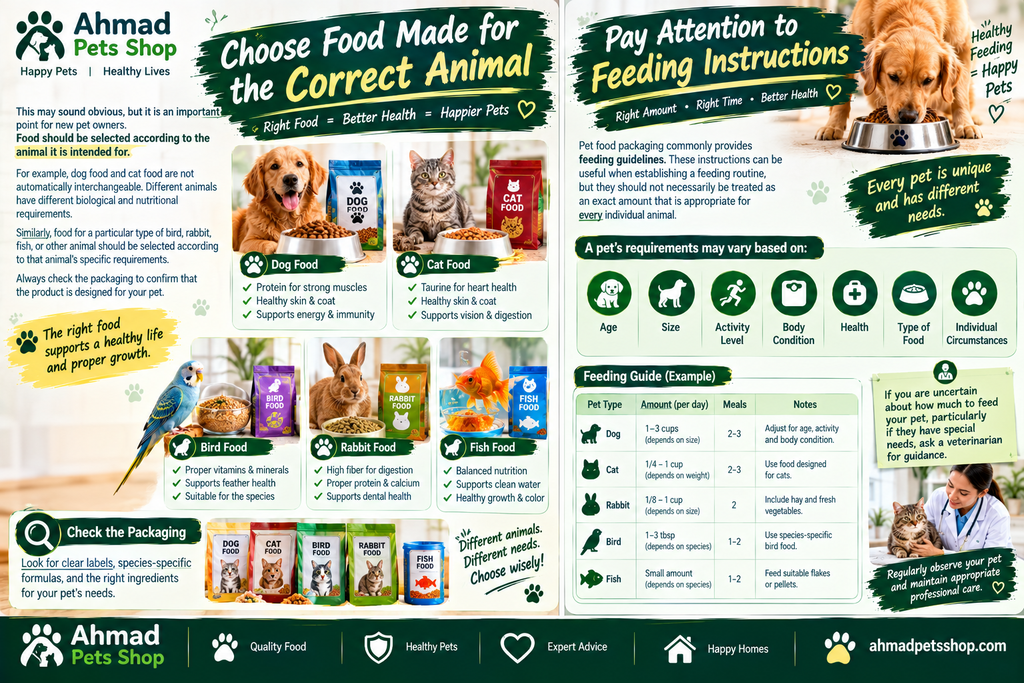
This may sound obvious, but it is an important point for new pet owners.
Food should be selected according to the animal it is intended for.
For example, dog food and cat food are not automatically interchangeable. Different animals have different biological and nutritional requirements.
Similarly, food for a particular type of bird, rabbit, fish, or other animal should be selected according to that animal’s specific requirements.
Always check the packaging to confirm that the product is designed for your pet.
Pay Attention to Feeding Instructions 🍽️
Pet food packaging commonly provides feeding guidelines.
These instructions can be useful when establishing a feeding routine, but they should not necessarily be treated as an exact amount that is appropriate for every individual animal.
A pet’s requirements may vary based on factors such as:
- Age
- Size
- Activity level
- Body condition
- Health
- Type of food
- Individual circumstances
If you are uncertain about how much to feed your pet, particularly if your pet has special needs, ask a veterinarian for guidance.
Regularly observing your pet and maintaining appropriate professional care can also help you understand whether the feeding routine needs to be reviewed.
Avoid Overfeeding Your Pet ❤️
One common mistake among pet owners is giving too much food.
Owners may sometimes give extra food because they think their pet is hungry, because the animal asks for more, or because treats are given throughout the day.
However, excessive feeding can contribute to unhealthy weight gain.
It is useful to keep track of regular meals and treats. Treats should also be considered as part of the overall feeding routine.
If you are concerned about your pet’s weight or body condition, speak with a veterinarian rather than making major dietary changes based on guesswork.
Treats Should Be Given Responsibly 🦴
Treats can be useful for training, interaction, or occasional enjoyment, but they should be selected and given responsibly.
Not every human food is suitable for animals, and some foods can be unsafe for certain pets.
When purchasing treats, check that they are designed for your particular animal and follow the manufacturer’s feeding instructions.
Treats should not replace a balanced diet.
If your pet has a special dietary requirement, allergy, or medical condition, ask a veterinarian before introducing new treats.
Keep Fresh Water Available 💧
Food is only one part of daily nutrition.
Fresh, clean drinking water is also essential for many pets.
Make sure your pet has appropriate access to water according to its species and individual needs. Water containers should be kept clean and checked regularly.
If food particles, dirt, hair, or other material gets into the water, clean the container and replace the water.
Changes in your pet’s normal drinking habits can sometimes be important. If you notice a significant or persistent change, especially when accompanied by other unusual signs, contact a veterinarian.
Consider Your Pet’s Activity Level 🐕🦺
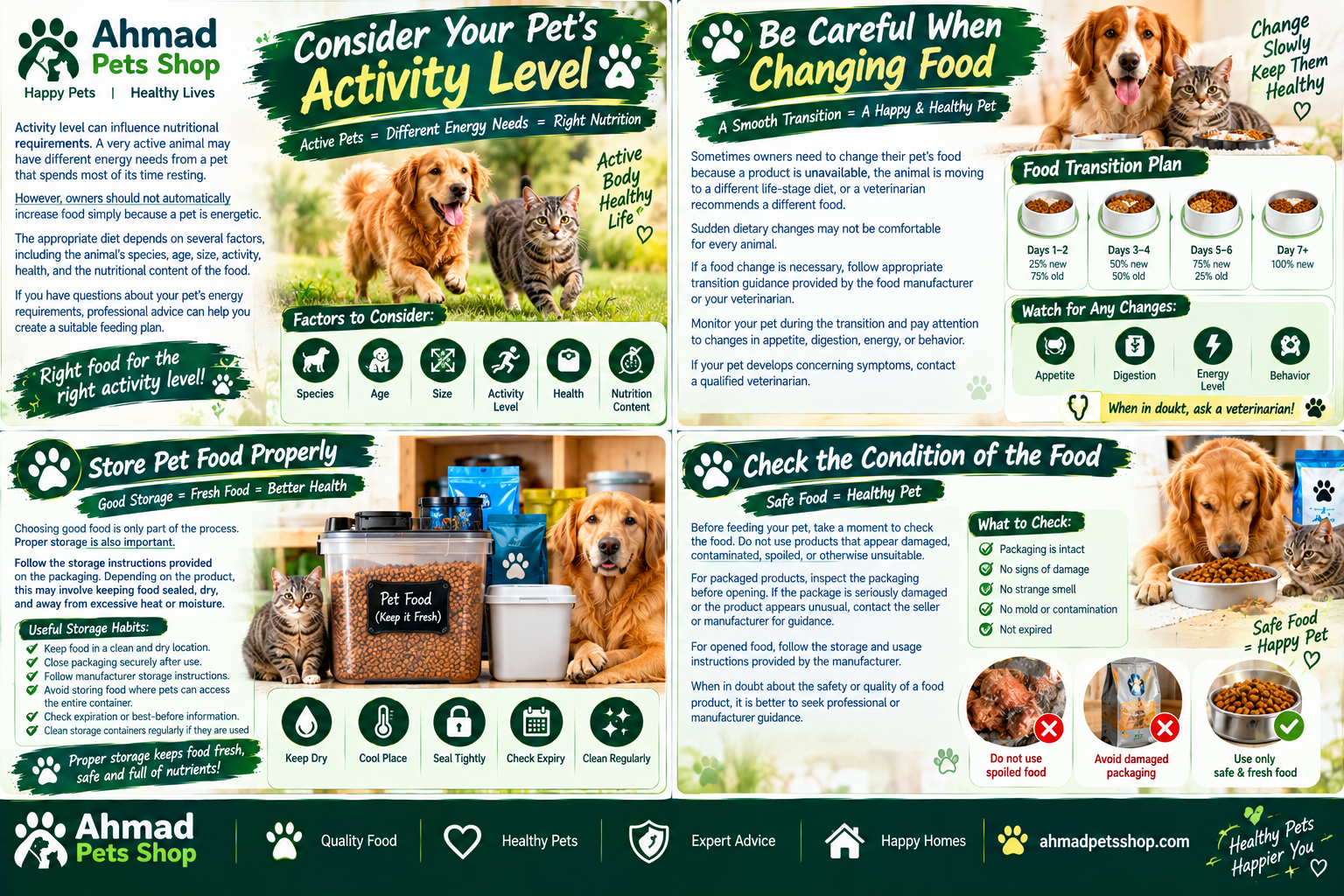
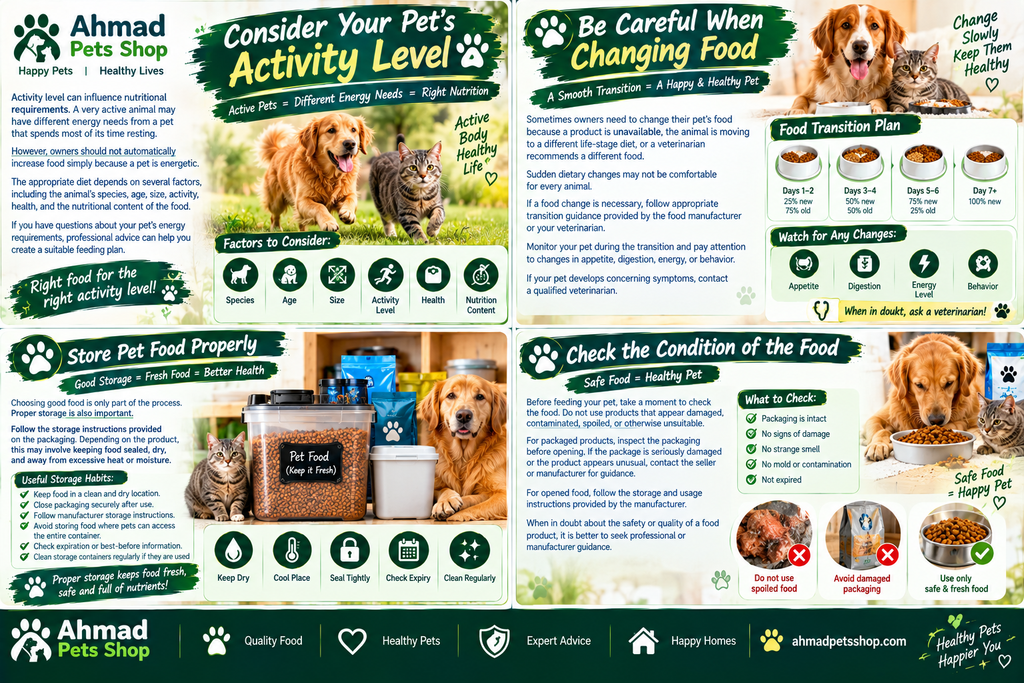
Activity level can influence nutritional requirements.
A very active animal may have different energy needs from a pet that spends most of its time resting.
However, owners should not automatically increase food simply because a pet is energetic.
The appropriate diet depends on several factors, including the animal’s species, age, size, activity, health, and the nutritional content of the food.
If you have questions about your pet’s energy requirements, professional advice can help you create a suitable feeding plan.
Be Careful When Changing Food
Sometimes owners need to change their pet’s food because a product is unavailable, the animal is moving to a different life-stage diet, or a veterinarian recommends a different food.
Sudden dietary changes may not be comfortable for every animal.
If a food change is necessary, follow appropriate transition guidance provided by the food manufacturer or your veterinarian.
Monitor your pet during the transition and pay attention to changes in appetite, digestion, energy, or behavior.
If your pet develops concerning symptoms, contact a qualified veterinarian.
Store Pet Food Properly 📦
Choosing good food is only part of the process. Proper storage is also important.
Follow the storage instructions provided on the packaging.
Depending on the product, this may involve keeping food sealed, dry, and away from excessive heat or moisture.
Some useful storage habits include:
- Keep food in a clean and dry location.
- Close packaging securely after use.
- Follow manufacturer storage instructions.
- Avoid storing food where pets can access the entire container.
- Check expiration or best-before information.
- Clean storage containers regularly if they are used.
Proper storage can help maintain food quality and reduce the chance of contamination.
Check the Condition of the Food
Before feeding your pet, take a moment to check the food.
Do not use products that appear damaged, contaminated, spoiled, or otherwise unsuitable.
For packaged products, inspect the packaging before opening it. If the package is seriously damaged or the product appears unusual, contact the seller or manufacturer for guidance.
For opened food, follow the storage and usage instructions provided by the manufacturer.
When in doubt about the safety or quality of a food product, it is better to seek professional or manufacturer guidance than to take unnecessary risks.
Wet Food and Dry Food
Depending on the animal, there may be different food formats available.
For some pets, owners may encounter dry food, wet food, fresh food, or other specially formulated diets.
Each type can have different characteristics, storage requirements, textures, and feeding considerations.
The choice should depend on the animal’s nutritional requirements and individual circumstances rather than simply choosing the most attractive packaging.
If you are considering a major change in your pet’s diet, especially because of a health concern, consult your veterinarian.
Be Careful With Human Food 🍎
Many pet owners enjoy sharing food with their animals, but not every human food is appropriate for pets.
Some foods that are normal for people can be harmful to certain animals.
Instead of assuming that a food is safe, check reliable information before giving it to your pet.
It is particularly important to be cautious with foods that contain ingredients known to be unsafe for certain animals.
If your pet accidentally eats something potentially harmful, contact a veterinarian or appropriate animal poison service as soon as possible rather than relying on internet advice.
Special Dietary Requirements
Some pets may require diets that are different from ordinary commercial food.
Special dietary needs can be associated with age, health conditions, allergies, sensitivities, weight-management concerns, or other circumstances.
If a veterinarian has recommended a particular diet, follow the professional guidance provided.
Do not replace a prescribed or professionally recommended diet with a different product simply because it appears similar.
Your veterinarian can help determine which food is appropriate based on your pet’s individual needs.
Choosing Pet Food on a Budget 💰
Good pet care does not always mean choosing the most expensive product.
Price can be one consideration, but it should not be the only factor.
When comparing pet food, consider:
- Whether it is designed for your pet
- Nutritional information
- Life-stage suitability
- Ingredients
- Feeding instructions
- Product quality
- Storage requirements
- Your pet’s individual needs
A lower-priced product is not automatically better or worse, and a higher-priced product is not automatically the right choice.
Focus on suitability and nutritional needs rather than making a decision based only on packaging or price.
Buy From Reliable Sources 🛒
Where you purchase pet food can also matter.
Choose reputable sellers and check the product carefully when it arrives.
When shopping online, review product descriptions, manufacturer information, packaging details, and storage instructions.
At Ahmad Pets Shop, we aim to provide useful educational information that helps pet owners understand what to consider when choosing pet products.
However, always check the actual product packaging and manufacturer information for the most specific details about a particular product.
Keep a Feeding Routine
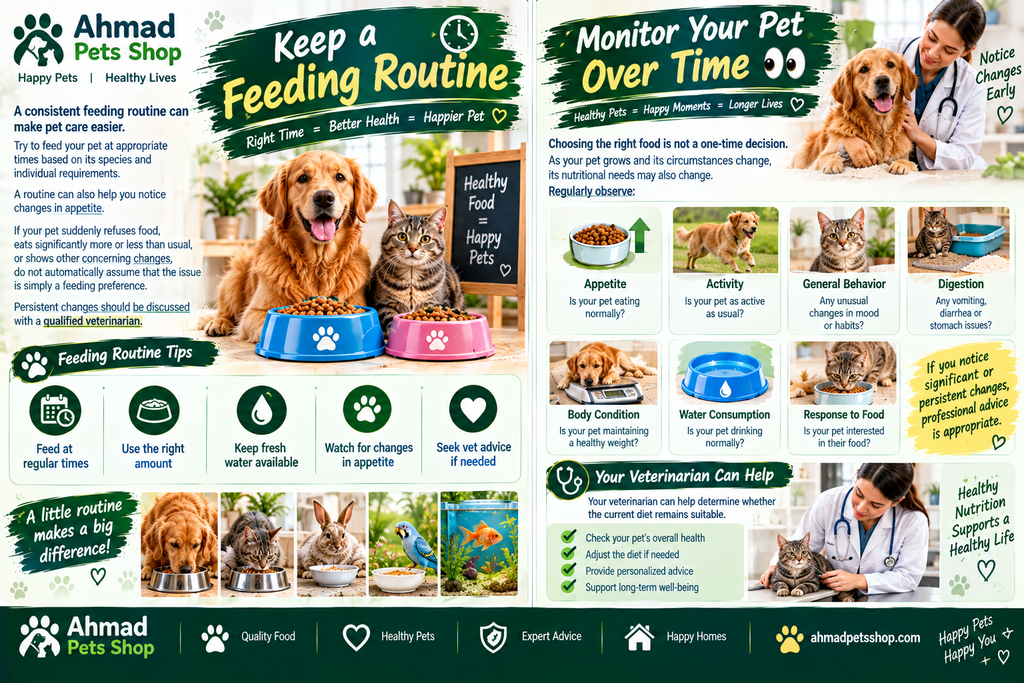
A consistent feeding routine can make pet care easier.
Try to feed your pet at appropriate times based on its species and individual requirements.
A routine can also help you notice changes in appetite.
If your pet suddenly refuses food, eats significantly more or less than usual, or shows other concerning changes, do not automatically assume that the issue is simply a feeding preference.
Persistent changes should be discussed with a qualified veterinarian.
Monitor Your Pet Over Time 👀
Choosing the right food is not a one-time decision.
As your pet grows and its circumstances change, its nutritional needs may also change.
Regularly observe:
- Appetite
- Activity
- General behavior
- Digestion
- Body condition
- Water consumption
- Response to food
If you notice significant or persistent changes, professional advice is appropriate.
Your veterinarian can help determine whether the current diet remains suitable.
Common Mistakes New Pet Owners Should Avoid
New pet owners can sometimes make simple feeding mistakes because they are still learning.
Some common mistakes include:
- Changing food too quickly
- Giving too many treats
- Feeding unsuitable human foods
- Ignoring feeding instructions
- Choosing food only because of attractive packaging
- Buying food intended for another animal
- Ignoring storage instructions
- Failing to monitor changes in appetite
- Making health-related dietary decisions without professional guidance
Learning about these mistakes can help new owners develop better habits.
Pet Nutrition Is Part of Responsible Pet Care 🐾
Food is not the only part of responsible pet ownership, but it is an important one.
A complete approach to pet care includes appropriate nutrition, fresh water, suitable housing, hygiene, activity, enrichment, safety, social interaction, and professional veterinary care when needed.
Owners should look at the bigger picture rather than focusing on one product or one feeding decision.
A healthy routine is built from many small, consistent habits.
Final Thoughts
Learning how to choose the right pet food is an important step for every responsible pet owner.
The best choice depends on your animal’s species, age, size, activity level, health, and individual requirements. Reading labels, following feeding guidance, providing fresh water, storing food correctly, and monitoring your pet can all contribute to better everyday care.
There is no single food that is automatically perfect for every animal. What matters is understanding your own pet and making informed choices based on reliable information and, when necessary, professional veterinary advice.
At Ahmad Pets Shop, we aim to make pet-care information easier for owners to understand so they can continue learning about the animals they care for. 🐶🐱🐰🐦
For more pet-care information, guides, and helpful tips, visit Ahmad Pets Shop.
Conclusion 🐾
Choosing suitable food is one of the most important daily responsibilities of pet ownership. By understanding your pet’s nutritional needs, checking food labels, following appropriate feeding instructions, providing fresh water, storing food properly, and seeking professional advice when necessary, you can build a more responsible feeding routine.
Remember that every pet is different. Always consider the individual animal rather than assuming that one diet or product will work for every pet.
Good pet care starts with attention, patience, and a willingness to learn. Keep observing your pet, use reliable information, and consult a qualified veterinarian whenever you have concerns about nutrition or health.