Introduction 🐾
Bringing a pet into your home can be an exciting and rewarding experience. Whether you are welcoming a dog, cat, rabbit, bird, fish, or another companion animal, having a pet also comes with an important responsibility. Pets depend on their owners for food, water, safety, cleanliness, attention, and a suitable environment.
For a new pet owner, knowing where to start can sometimes feel confusing. There are many things to think about, from choosing the right pet supplies to creating a daily routine and learning how to understand your pet’s behavior.
The good news is that pet care does not have to be complicated. Learning the basics and developing good habits can make everyday care much easier.
In this guide, we are sharing practical pet care tips for new pet owners to help you understand some of the most important parts of responsible pet ownership. At Ahmad Pets Shop, our goal is to make useful pet information simple and accessible for pet lovers.
1. Learn About Your Pet Before Bringing It Home 🏡
One of the most important steps in becoming a responsible pet owner is learning about your animal’s basic needs.
Different animals require different types of care. A dog, cat, rabbit, bird, and fish cannot all be cared for in exactly the same way. Even pets belonging to the same species may have different needs depending on their age, size, breed, activity level, and individual characteristics.
Before bringing a pet home, spend some time learning about:
- Suitable food
- Housing requirements
- Exercise needs
- Grooming requirements
- Normal behavior
- Suitable toys and accessories
- Cleaning requirements
- Safety concerns
- Social needs
- Veterinary care
Understanding these basics can help you prepare your home and avoid unnecessary problems later.
A little preparation can make the first few days much more comfortable for both you and your new pet.
2. Prepare the Right Pet Supplies 🛍️
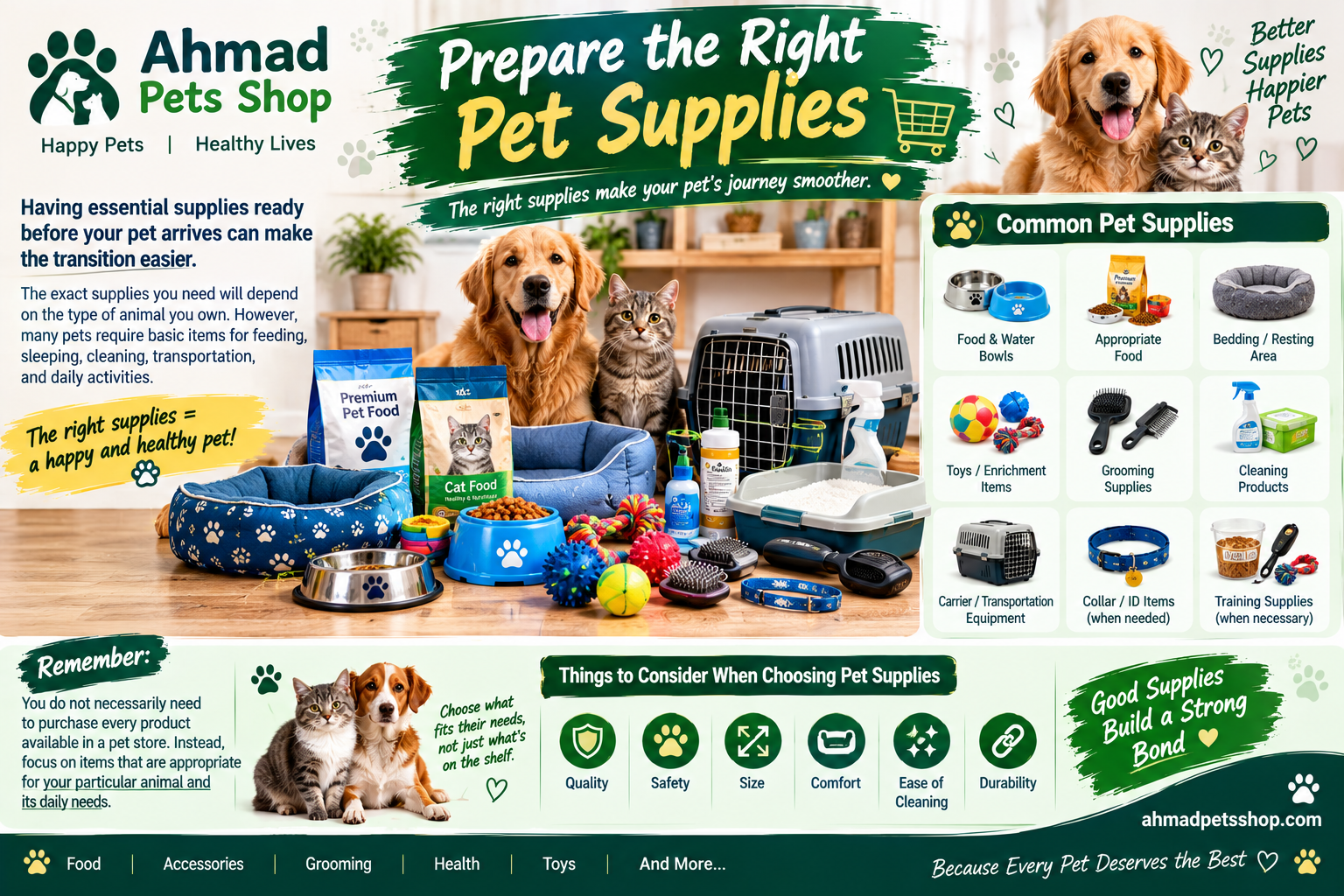
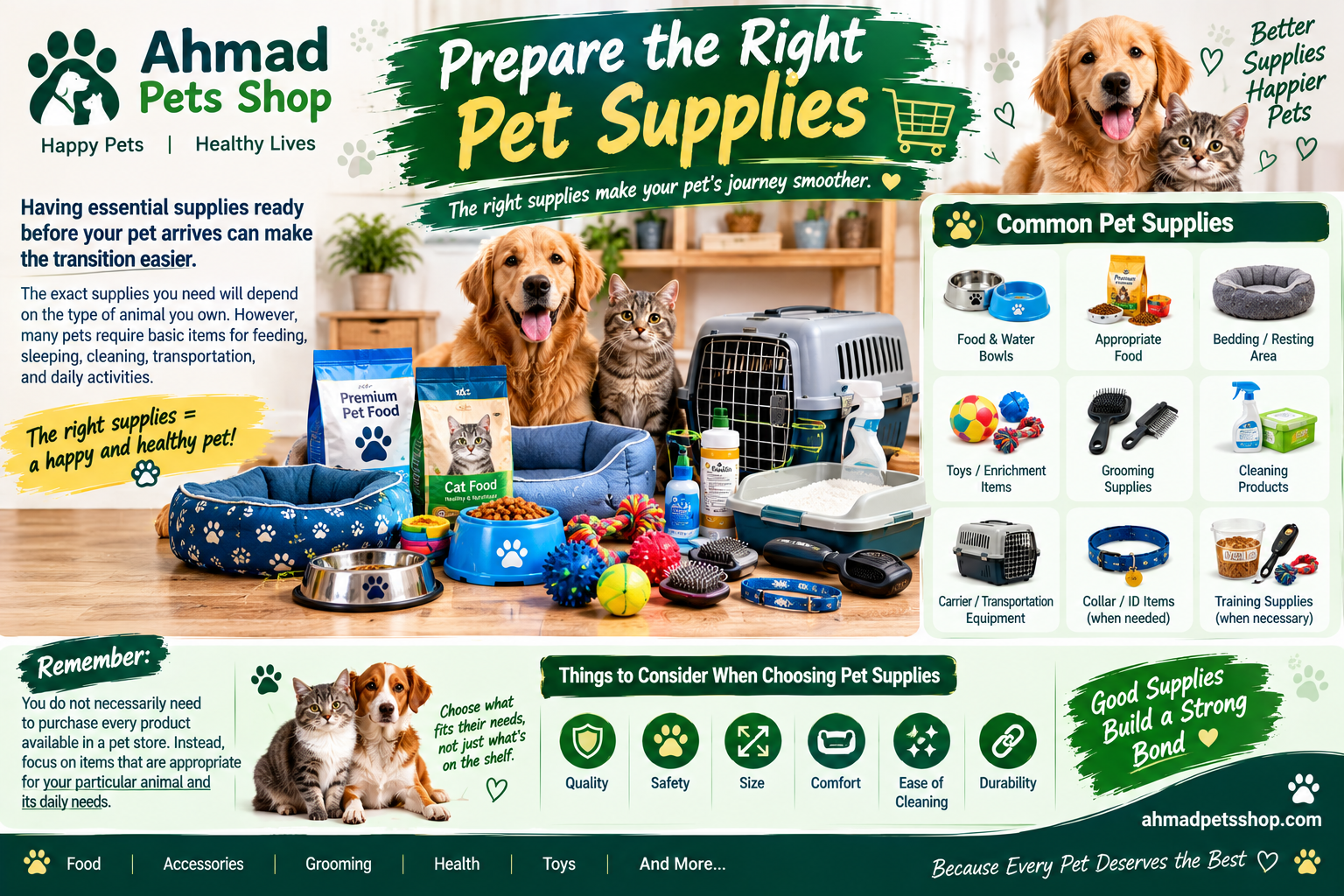
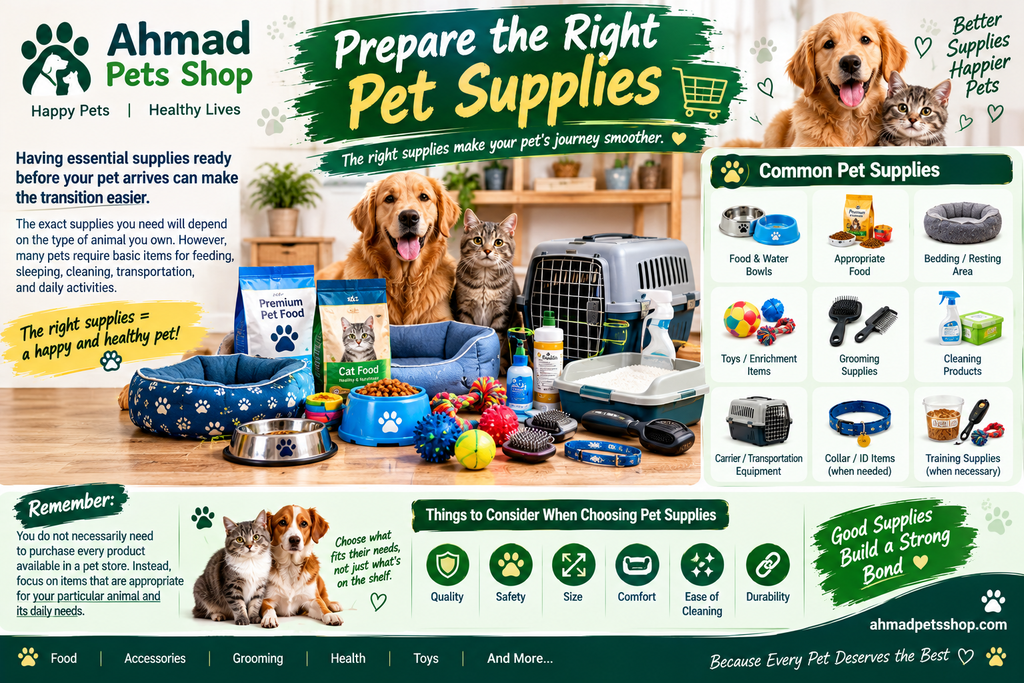
Having essential supplies ready before your pet arrives can make the transition easier.
The exact supplies you need will depend on the type of animal you own. However, many pets require basic items for feeding, sleeping, cleaning, transportation, and daily activities.
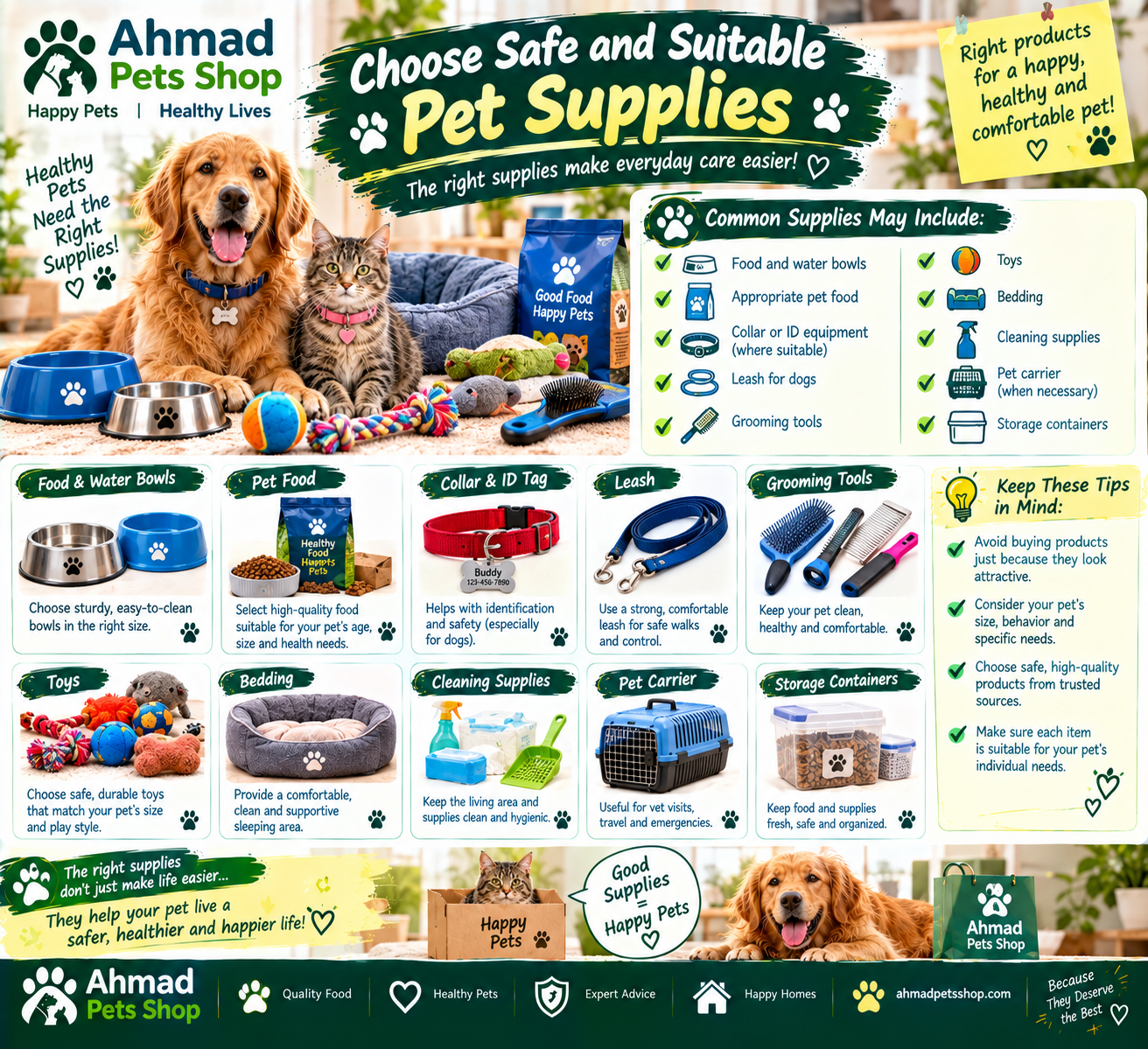
Common pet supplies may include:
- Food and water bowls
- Appropriate food
- Bedding or a suitable resting area
- Toys or enrichment items
- Grooming supplies
- Cleaning products
- A carrier or suitable transportation equipment
- Collar or identification items where appropriate
- Training supplies where necessary
You do not necessarily need to purchase every product available in a pet store. Instead, focus on items that are appropriate for your particular animal and its daily needs.
When choosing pet supplies, consider quality, safety, size, comfort, ease of cleaning, and suitability.
3. Create a Consistent Daily Routine ⏰
Pets often benefit from predictable routines.
A regular schedule can make daily care easier for the owner and can help pets become familiar with activities such as feeding, exercise, grooming, and rest.
Your routine may include:
Morning: Feeding, fresh water, bathroom needs, and appropriate activity.
During the day: Rest, play, enrichment, or exercise depending on the pet.
Evening: Feeding, interaction, cleaning, grooming when necessary, and preparing the pet’s resting area.
The exact routine will depend on the animal.
Consistency is more important than creating a complicated schedule. A simple routine that you can maintain every day is often more practical than a detailed routine that is difficult to follow.
4. Provide Fresh Water Every Day 💧
Fresh, clean water is an essential part of everyday pet care.
Pet owners should make sure their animals have access to suitable drinking water according to their species and individual needs.
Water containers should be checked regularly and kept clean. If food, dirt, hair, or other material gets into the water, it should be replaced.
The location of the water container also matters. It should be placed somewhere appropriate and accessible to the pet.
If you notice that your pet’s drinking habits change significantly, especially together with other unusual signs, it is sensible to contact a veterinarian for professional advice.
5. Choose Food Carefully 🍽️
Feeding your pet is one of the most important responsibilities of ownership.
Different animals have different nutritional requirements, so owners should learn what type of food is appropriate for their particular pet.
When choosing pet food, consider factors such as:
- Species
- Age
- Size
- Activity level
- Individual dietary needs
- Food ingredients
- Feeding instructions
Avoid assuming that food suitable for humans is automatically suitable for animals. Some foods can be inappropriate or harmful to pets.
New pet owners should also avoid making major dietary changes without understanding the potential effects. If your pet has a health condition, allergy, special dietary requirement, or unusual reaction to food, speak with a qualified veterinarian.
Good nutrition is an important part of responsible pet ownership, but individual dietary decisions should be based on the needs of the specific animal.
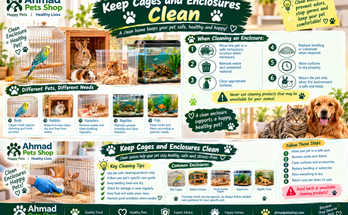
6. Keep Your Pet’s Living Area Clean 🧹
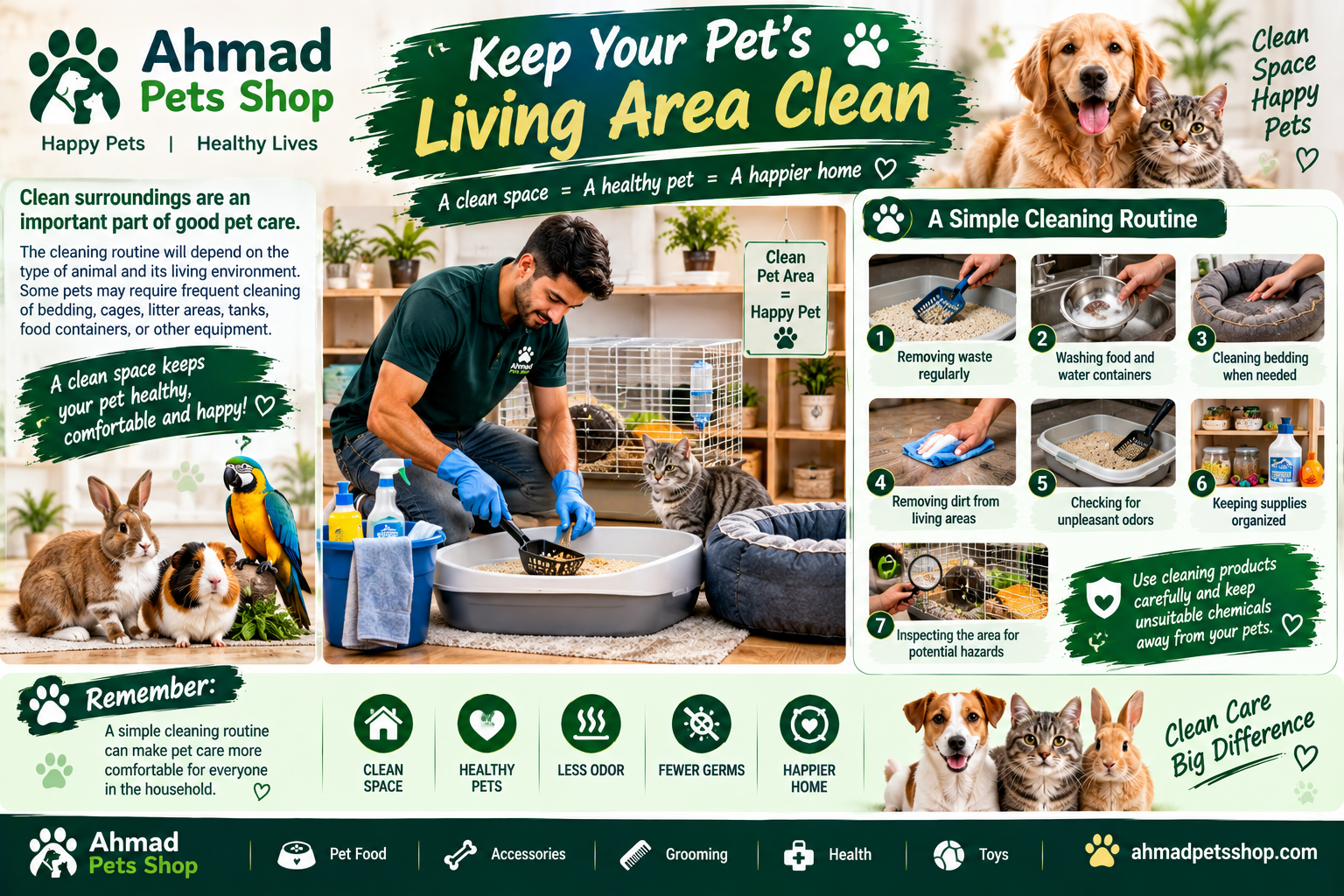
Clean surroundings are an important part of good pet care.
The cleaning routine will depend on the type of animal and its living environment. Some pets may require frequent cleaning of bedding, cages, litter areas, tanks, food containers, or other equipment.
A simple cleaning routine can include:
- Removing waste regularly
- Washing food and water containers
- Cleaning bedding when needed
- Removing dirt from living areas
- Checking for unpleasant odors
- Keeping supplies organized
- Inspecting the area for potential hazards
Keeping the environment clean can make pet care more comfortable for everyone in the household.
It is also helpful to use cleaning products carefully and keep unsuitable chemicals away from pets.
7. Give Your Pet Appropriate Exercise and Activity 🐕🐈
Physical activity is an important part of pet care for many animals.
The type and amount of activity required will depend on the species, age, health, and individual characteristics of your pet.
Dogs may need walks and playtime. Cats may enjoy interactive play and suitable climbing or exploring opportunities. Other animals may have completely different activity requirements.
The goal is not simply to keep a pet busy. Activities should be appropriate, safe, and suitable for the animal.
New owners should learn what types of exercise and enrichment are appropriate for their pet rather than copying another animal’s routine.
8. Spend Quality Time With Your Pet ❤️
Pet care is not only about food and cleaning.
Many companion animals benefit from appropriate interaction and attention from their owners. Spending time with your pet can help you understand its normal behavior and build a positive relationship.
Depending on the animal, quality time may include:
- Gentle interaction
- Play
- Training
- Grooming
- Talking to your pet
- Supervised exploration
- Appropriate exercise
Every animal has its own personality. Some pets may enjoy frequent interaction, while others may need more personal space.
Learning to respect your pet’s behavior and boundaries is an important part of responsible pet ownership.
9. Learn Basic Grooming 🧼
Grooming can be an important part of everyday pet care.
The grooming needs of pets vary considerably. Some animals may require regular brushing, while others may have different hygiene requirements.
Basic grooming can include appropriate brushing, cleaning, nail care, coat care, or other species-specific practices.
Before starting a grooming routine, new pet owners should learn the correct method for their particular animal.
If you are unsure about a grooming procedure, asking a qualified professional for guidance can be helpful.
Grooming should be handled calmly and carefully. Forcing an animal through a stressful grooming process can create a negative experience.
10. Make Your Home Safe for Your Pet ⚠️
Pet-proofing your home is an important responsibility.
Animals can sometimes explore areas that owners do not expect them to reach. This means potential hazards should be considered before allowing a new pet to explore freely.
Depending on the animal, owners may need to pay attention to:
- Electrical wires
- Small objects
- Unsafe foods
- Household chemicals
- Open doors or windows
- Sharp objects
- Unsafe plants
- Hot surfaces
- Unstable furniture
- Small spaces where a pet could become trapped
The safest approach depends on the type of pet you own.
Regularly look around your home from your pet’s perspective and consider what could potentially create a problem.
11. Give Your Pet Time to Adjust 🐾
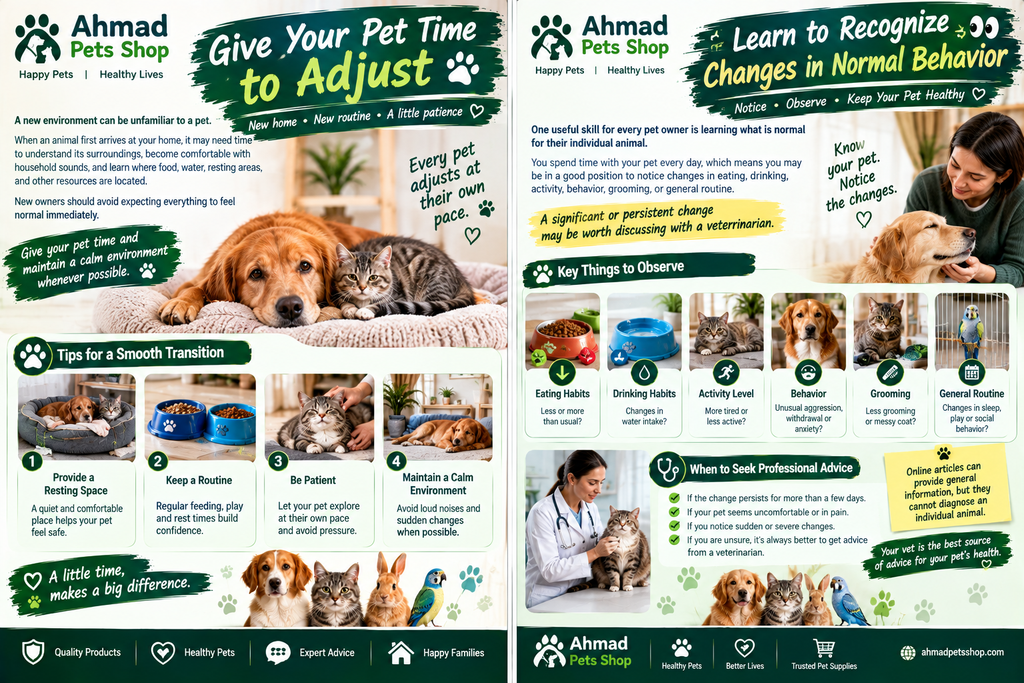
A new environment can be unfamiliar to a pet.
When an animal first arrives at your home, it may need time to understand its surroundings, become comfortable with household sounds, and learn where food, water, resting areas, and other resources are located.
New owners should avoid expecting everything to feel normal immediately.
Give your pet time and maintain a calm environment whenever possible.
A consistent routine, suitable resting space, and patient interaction can help make the transition easier.
Remember that every animal adjusts at its own pace.
12. Learn to Recognize Changes in Normal Behavior 👀
One useful skill for every pet owner is learning what is normal for their individual animal.
You spend time with your pet every day, which means you may be in a good position to notice changes in eating, drinking, activity, behavior, grooming, or general routine.
A significant or persistent change may be worth discussing with a veterinarian.
Online articles can provide general information, but they cannot diagnose an individual animal.
If something about your pet concerns you, professional veterinary guidance is the appropriate source of advice.
13. Schedule Appropriate Veterinary Care 🩺
Veterinary care is an important part of responsible pet ownership.
Pets may require routine examinations, vaccinations, preventive care, dental care, parasite control, or other professional services depending on their species and individual circumstances.
New pet owners should learn about the appropriate veterinary care for their animal.
It is also useful to know where your nearest suitable veterinary clinic is before an emergency occurs.
Keeping important veterinary information organized can make it easier to respond when professional care is needed.
14. Be Careful When Choosing Toys 🧸
Toys can provide activity and enrichment for many pets, but not every toy is suitable for every animal.
When choosing a toy, consider:
- The pet’s size
- The animal’s behavior
- The material
- The design
- The intended purpose
- Potential small or removable parts
- Manufacturer instructions
Pets should be supervised appropriately when using unfamiliar toys.
Inspect toys regularly and remove items that become damaged or unsuitable.
A good toy is not necessarily the most expensive one. Suitability and safety are more important considerations.
15. Choose Pet Accessories According to Need
Pet accessories can be useful, but they should be selected carefully.
For example, collars, harnesses, carriers, bedding, feeding equipment, grooming tools, and other accessories should be appropriate for the pet using them.
Size is especially important.
An accessory that is too small may be uncomfortable, while one that is too large may not work as intended.
Before purchasing an item, check the manufacturer’s sizing information and consider your pet’s individual measurements.
At Ahmad Pets Shop, our goal is to help pet lovers understand what to consider when choosing products rather than simply encouraging unnecessary purchases.
16. Keep Important Pet Information Organized 📋
New pet owners can benefit from keeping important information in one place.
You may want to keep records relating to:
- Veterinary visits
- Vaccinations
- Food preferences
- Important contact information
- Medication prescribed by a veterinarian
- Grooming routines
- Relevant product instructions
- Other important care information
Having these details organized can make everyday care easier.
It can also be useful when speaking with a veterinarian or another qualified professional.
17. Never Ignore Pet Safety
Responsible pet ownership means taking safety seriously.
Do not assume that an animal understands household dangers. Pets may investigate objects, foods, areas, or substances without understanding the potential consequences.
Keep potentially dangerous household items stored appropriately and supervise your pet according to its needs.
When introducing a new product, food, toy, accessory, or activity, consider whether it is suitable for your particular animal.
If you are uncertain about a safety issue, seek advice from an appropriate professional rather than taking unnecessary risks.
18. Be Patient With Training and Learning 🌟
Training can take time.
New pet owners sometimes expect immediate results, but animals need time to learn new routines and behaviors.
Training approaches should be suitable for the animal and based on patience and consistency.
Avoid expecting every pet to learn at the same speed. Age, previous experiences, temperament, environment, and other factors can influence learning.
If you experience persistent training or behavior difficulties, professional guidance from an appropriate trainer, behavior professional, or veterinarian may be helpful.
19. Understand That Pet Ownership Is a Long-Term Commitment ❤️
Before getting a pet, it is important to understand that ownership is a long-term responsibility.
Pets need care not only when they are young or when they are fun to play with. They depend on their owners throughout their lives.
This means considering:
- Time
- Food
- Supplies
- Veterinary expenses
- Cleaning
- Exercise
- Attention
- Housing
- Travel arrangements
- Long-term commitment
Thinking about these responsibilities before getting a pet can help people make more thoughtful decisions.
20. Continue Learning as a Pet Owner 📚
You do not need to know everything on the first day.
Being a good pet owner is an ongoing learning process.
As your pet grows and its needs change, you may need to learn new things about nutrition, grooming, activity, behavior, safety, and general care.
Reliable educational resources, qualified veterinarians, experienced professionals, and responsible pet-care websites can all be useful sources of information.
At Ahmad Pets Shop, we aim to continue creating practical content that helps pet owners learn more about their animals.
Final Thoughts 🐾
Becoming a new pet owner is a journey filled with responsibility, learning, and rewarding moments.
The most important pet care tips for new pet owners are simple: understand your animal’s needs, provide suitable food and clean water, maintain a safe and clean environment, create a consistent routine, choose appropriate supplies, provide suitable activity, and seek professional help whenever your pet needs it.
There is no need to become an expert overnight. Start with the basics, observe your pet carefully, learn from reliable sources, and build good habits over time.