
Why Pet Grooming Is Important
Regular grooming is an important part of pet hygiene. Pets can collect dirt, loose hair, dust, and other materials in their coat during normal daily activities. Without appropriate grooming, some pets may become uncomfortable or develop tangled or matted fur.
Grooming also gives owners an opportunity to look at their pets more closely. While brushing or cleaning your pet, you may notice changes in the skin, coat, paws, ears, or nails.
A consistent grooming routine can help your pet become familiar with being handled. This is particularly useful for young pets because gentle and positive experiences can make future grooming easier.
Grooming needs are different for every animal. A short-haired pet may need less brushing than a long-haired pet, while some pets may need more frequent attention depending on their coat, lifestyle, and daily activities.
Create a Comfortable Grooming Area
Before starting, choose a safe and comfortable place for grooming. The area should be clean, calm, and large enough for you and your pet to move comfortably.
Avoid grooming your pet in a place where there are unnecessary distractions or hazards. Keep grooming tools organized so you do not need to leave your pet unattended while searching for something.
A calm environment can make the grooming experience easier for both you and your pet. 🐶🐱
If your pet becomes nervous, allow it some time to relax. Grooming should not become a frightening experience. Patience is an important part of grooming pets at home.
Brush Your Pet Regularly
Brushing is one of the simplest forms of pet grooming. It can help remove loose hair, dirt, and small tangles from the coat.
The right brushing frequency depends on your pet’s coat. Some pets may benefit from regular brushing, while others may need it less often.
When brushing:
- Choose a brush suitable for your pet’s coat.
- Start gently.
- Avoid pulling tangled hair aggressively.
- Pay attention to areas where tangles commonly form.
- Give your pet breaks if necessary.
- Keep the experience calm and positive.
If you find severe matting or a difficult knot, avoid forcing the brush through it. A professional groomer or veterinarian may be able to advise you on the safest approach.

Bathing Your Pet
Bathing can help keep your pet clean, but not every pet needs frequent baths. The appropriate bathing routine depends on the animal, coat type, lifestyle, and advice from a veterinary professional.
Before bathing your pet, prepare everything you need. This can include:
- Pet-appropriate shampoo
- Towels
- A safe bathing area
- A brush
- Clean water
- A comfortable place for drying
Use products specifically designed for pets rather than automatically using human products. Pets can have different skin needs, and unsuitable products may cause irritation.
Keep water at a comfortable temperature and avoid getting water or products unnecessarily into sensitive areas.
After the bath, dry your pet properly. A wet coat can make your pet uncomfortable, especially in cooler conditions.
Take Care of Your Pet’s Nails
Nail care is another important part of pet grooming. Nails that become excessively long can make walking uncomfortable and may affect normal movement.
However, trimming nails requires care. If you are not familiar with the process, ask a veterinarian or professional groomer to show you the appropriate technique for your pet.
Never rush nail trimming. Your pet may move suddenly, so patience and gentle handling are important.
If your pet strongly resists nail care, professional assistance may be a safer option.
Check and Clean the Ears Carefully
Some pets require regular ear care, while others may need less frequent attention. During grooming, you can gently check the outer part of your pet’s ears for visible dirt or unusual changes.
Do not insert objects deeply into the ear canal. If you notice unusual discharge, strong odor, swelling, redness, or signs of discomfort, consult a veterinarian.
Ear care should always be gentle. The goal is to keep your pet comfortable rather than cleaning unnecessarily.
Keep the Face Clean
Depending on the type of pet, the face may collect food particles, dirt, or other debris. You can gently clean visible dirt around the appropriate areas using a clean, pet-safe method.
Extra care is needed around the eyes. Avoid using products that are not intended for that area.
If you notice persistent discharge, swelling, irritation, or other unusual changes around the eyes or face, professional veterinary advice is appropriate.
Look After Your Pet’s Paws
Your pet’s paws are in contact with the ground every day, so they deserve attention during grooming.
Check the paws for visible dirt, stones, mud, or other unwanted material after outdoor activities. Gently clean them when necessary.
You can also look at the paw area for signs of irritation or discomfort. If something appears unusual or your pet repeatedly shows discomfort while walking, consult a veterinarian.
Keeping paws clean can become a simple part of your daily pet care routine.
Choose the Right Grooming Tools
Having appropriate grooming tools can make the process easier. The exact tools you need depend on your pet.
Common grooming supplies may include:
- Suitable brushes or combs
- Pet shampoo
- Towels
- Nail-care tools
- Pet-safe cleaning products
- Grooming wipes when appropriate
- A suitable grooming mat
You do not need to purchase every available grooming product. Start with the tools that match your pet’s actual needs.
Quality and suitability are more important than simply having a large collection of grooming accessories.
Grooming Dogs at Home
Dogs can have very different grooming needs depending on their breed, coat type, size, lifestyle, and activity level.
Short-haired dogs may need regular brushing to remove loose hair, while long-haired dogs may require more frequent brushing to reduce tangles.
Dogs that spend significant time outdoors may also need more attention to their paws and coat.
A simple dog grooming routine can include brushing, checking paws, looking at the ears, maintaining appropriate nail care, and bathing when needed.
Always consider your dog’s individual needs rather than following the exact same routine used for another dog.
Grooming Cats at Home
Cats are generally known for grooming themselves, but many cats can still benefit from appropriate brushing.
Regular brushing can help remove loose hair and keep the coat in good condition. It can also help owners become familiar with their cat’s normal skin and coat.
Cats may not always enjoy grooming, so introduce brushing gradually. Keep sessions short and calm, especially if your cat is not accustomed to being handled.
Never force a grooming session when your cat is extremely stressed. Patience can help build trust over time.

Make Grooming a Positive Experience
One of the most useful pet grooming tips is to make grooming as positive as possible.
Start with short sessions. Allow your pet to become comfortable with the grooming tool before using it.
You can use praise and appropriate rewards to encourage calm behavior.
For example, you might begin by allowing your pet to see and smell the brush. Then gently brush a small area before taking a break.
Over time, your pet may become more comfortable with the routine.
Remember that every pet is different. Some animals become comfortable quickly, while others need more time.
Watch for Changes During Grooming
Grooming provides a useful opportunity to become familiar with your pet’s normal appearance.
While brushing or handling your pet, look for unusual changes such as:
- New lumps or bumps
- Significant changes in the coat
- Persistent skin irritation
- Unusual swelling
- Changes around the paws
- Unusual ear discharge
- Persistent scratching
- Signs of discomfort
These observations do not automatically mean your pet has a serious problem. However, unusual or persistent changes are worth discussing with a veterinarian.
Grooming is not a replacement for professional veterinary care.
Avoid Common Grooming Mistakes
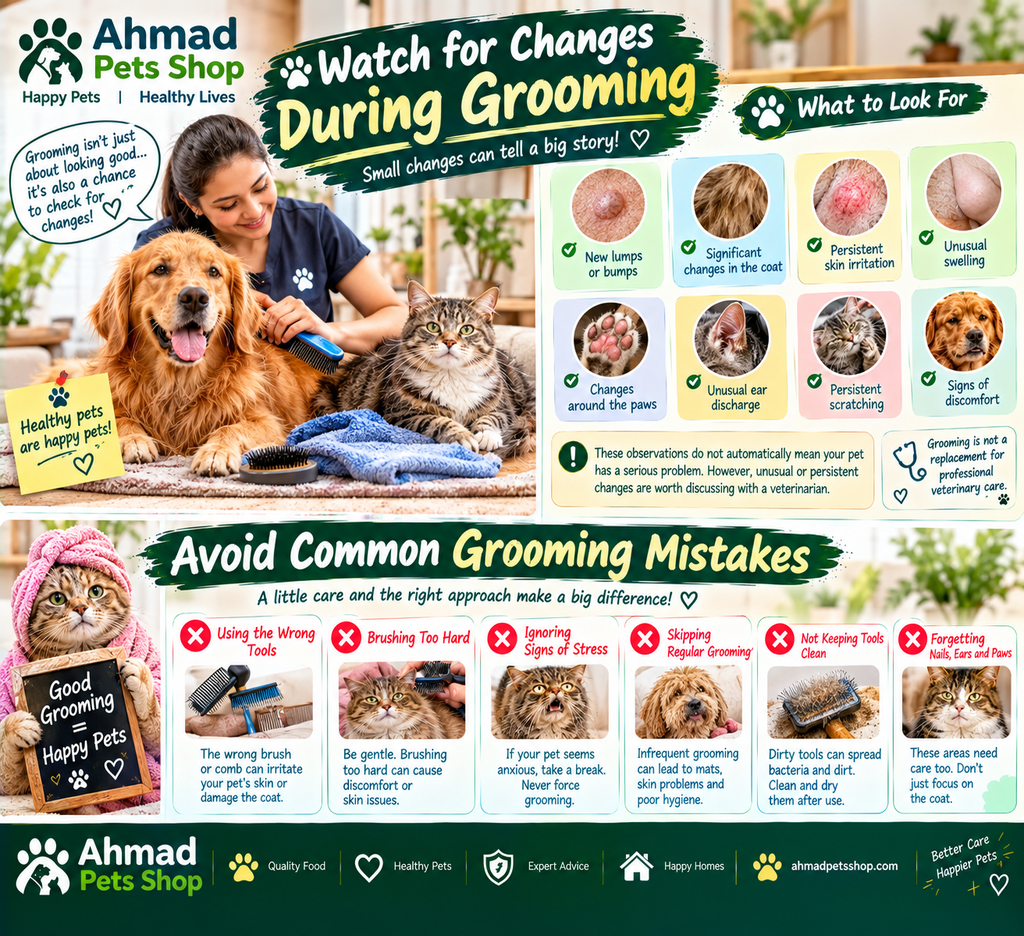
Some common mistakes can make grooming unnecessarily difficult.
One mistake is rushing the process. Pets can become nervous when grooming is sudden or uncomfortable.
Another mistake is using unsuitable human products. Always check whether a product is appropriate for your animal.
It is also important not to ignore your pet’s behavior. If your pet is clearly uncomfortable, take a break and consider getting professional assistance.
Finally, avoid trying complicated grooming procedures without proper knowledge. Professional groomers and veterinarians can help with tasks that require specialized skills.
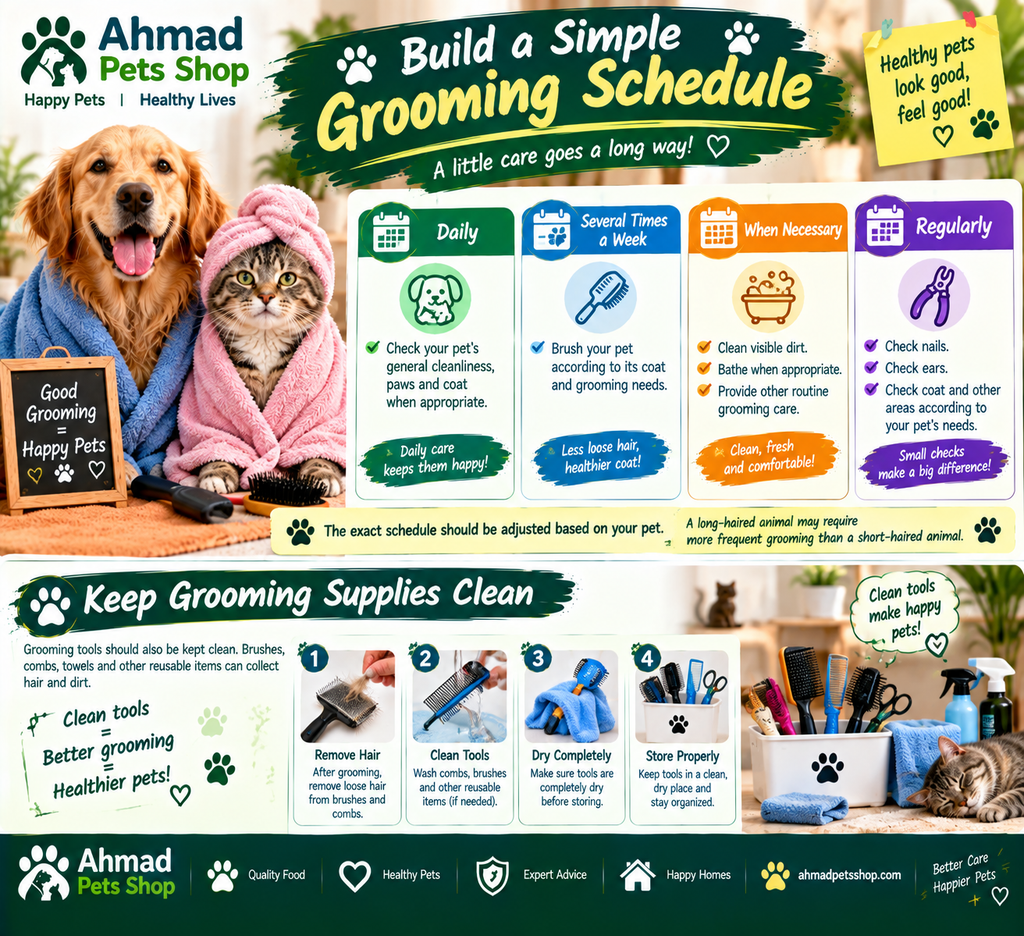
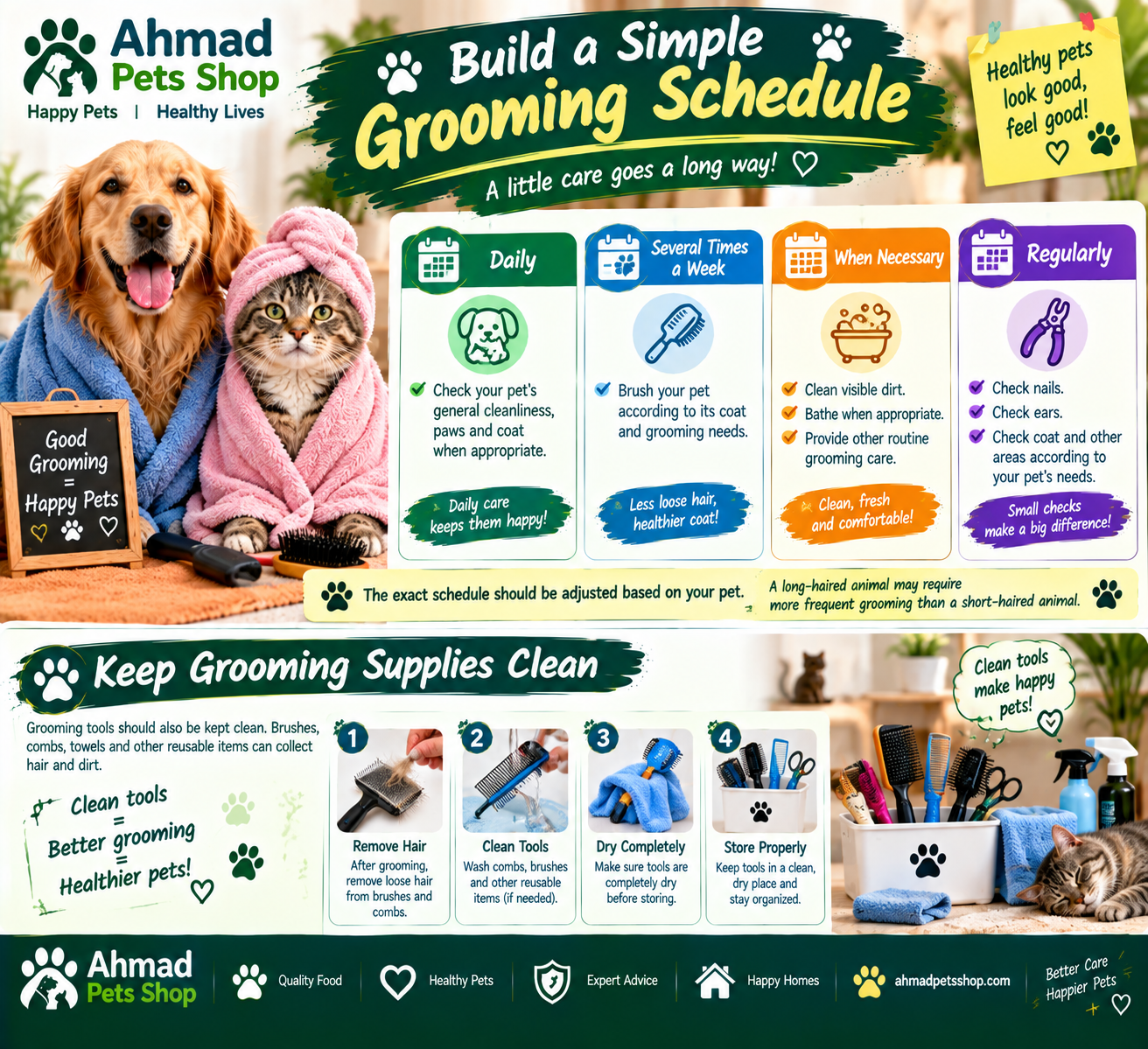
Build a Simple Grooming Schedule
A grooming schedule can help you remember your pet’s needs.
Your routine might include:
Daily:
Check your pet’s general cleanliness, paws, and coat when appropriate.
Several times a week:
Brush your pet according to its coat and grooming needs.
When necessary:
Clean visible dirt, bathe when appropriate, and provide other routine grooming care.
Regularly:
Check nails, ears, coat, and other areas according to your pet’s needs.
The exact schedule should be adjusted based on your pet. A long-haired animal may require more frequent grooming than a short-haired animal.
Keep Grooming Supplies Clean
Grooming tools should also be kept clean. Brushes, combs, towels, and other reusable items can collect hair and dirt.
After grooming, remove loose hair from brushes and store tools in a clean, dry place.
Keeping grooming supplies organized can make the next session easier and more hygienic.
Grooming and Responsible Pet Ownership
Pet grooming is not only about appearance. It is part of responsible pet care.
A clean and comfortable pet can enjoy everyday activities more easily, while regular handling helps owners become familiar with their animal’s normal condition.
Grooming also encourages owners to pay attention to small changes rather than ignoring them.
Responsible pet ownership means understanding that grooming, nutrition, exercise, safety, social interaction, and veterinary care all work together.
When to Contact a Professional
Home grooming is useful for many routine tasks, but professional help is sometimes appropriate.
Consider contacting a professional groomer or veterinarian if:
- Your pet has severe matting.
- Your pet becomes highly distressed during grooming.
- You are unsure how to trim nails safely.
- Your pet has unusual skin or coat changes.
- There are signs of pain or discomfort.
- You need advice about a specialized grooming routine.
Professional assistance can help you learn safer techniques and understand your pet’s individual needs.
Final Pet Grooming Checklist
Before finishing a grooming session, you can use this simple checklist:
✅ Brush the coat when appropriate
✅ Check the paws
✅ Look at the ears
✅ Check nails
✅ Keep the face clean
✅ Bathe only when appropriate
✅ Dry your pet properly
✅ Clean and store grooming tools
✅ Watch for unusual changes
✅ Keep the experience calm and positive
This simple routine can make pet grooming at home more organized and comfortable.
Conclusion
Learning how to groom your pet at home can be an important part of everyday pet care. Simple activities such as brushing, checking paws, maintaining appropriate nail care, keeping the coat clean, and observing your pet can support good hygiene and comfort.
The most important thing is to understand that every pet has different grooming needs. Coat type, age, lifestyle, and individual behavior can all affect how often grooming should be done.
Keep grooming sessions gentle, use appropriate products and tools, and avoid rushing. When a grooming task is difficult or requires specialized knowledge, professional help is a sensible option.