Introduction 🐾
Home should be a comfortable and safe place for every pet. Whether you have a dog, cat, rabbit, bird, fish, or another companion animal, creating a suitable environment is one of the most important responsibilities of pet ownership.
Many household items that seem harmless to people can potentially create problems for animals. Pets naturally explore their surroundings, and they may chew, lick, scratch, climb, or investigate things that owners would normally ignore. This is why understanding basic pet safety can help owners reduce avoidable risks.
Learning how to keep your pet safe at home does not mean making your house completely different. Instead, it means looking at your home from your pet’s perspective and identifying areas that may need attention.
At Ahmad Pets Shop, we believe responsible pet care includes more than food and grooming. Safety, supervision, cleanliness, suitable products, and a comfortable environment are also important parts of everyday pet ownership.
In this guide, we will discuss practical pet safety tips that can help you create a safer home for your animal.
Why Pet Safety at Home Matters 🏡
Pets depend on their owners to provide a suitable environment.
Unlike people, animals may not understand that certain objects, foods, chemicals, or areas can be dangerous. A curious pet may investigate something simply because it looks interesting.
Potential household hazards can include:
- Electrical wires
- Cleaning products
- Certain foods
- Small objects
- Sharp items
- Unsafe plants
- Open windows
- Hot surfaces
- Medicines
- Unstable furniture
- Unsafe toys
- Small spaces
The risks depend on the type of animal you have.
A dog may chew objects, a cat may climb furniture, a rabbit may explore wires, and a bird may investigate objects with its beak. Every species has different behaviors, so pet safety should be based on the specific animal.
1. Keep Electrical Wires Out of Reach ⚡
Electrical cables can attract curious pets, particularly animals that like to chew or explore.
Where possible, keep wires organized and away from areas where your pet spends time.
You can also avoid leaving loose cables on the floor where an animal can easily reach them.
Regularly check cables and electrical equipment for signs of damage.
If you notice that your pet is repeatedly trying to chew wires, take the behavior seriously and adjust the environment to reduce access.
Never assume that an animal will eventually stop investigating something dangerous.
2. Store Cleaning Products Safely 🧴
Household cleaning products should be stored in places where pets cannot access them.
Cleaning products, detergents, disinfectants, and other chemicals may not be suitable for animals.
Keep containers securely closed and follow the manufacturer’s storage instructions.
It is also important to avoid allowing pets to come into contact with freshly cleaned areas until the products have been used and dried according to their instructions.
If your pet accidentally comes into contact with or consumes a potentially harmful chemical, contact a veterinarian or appropriate animal emergency service immediately.
3. Be Careful With Human Food 🍽️
Pets may become interested in food because of its smell, but food that is safe for people is not necessarily safe for animals.
Owners should learn which foods are appropriate for their particular pet and avoid feeding unfamiliar foods without checking first.
Keep potentially unsafe foods away from pets and avoid leaving plates or food containers where animals can easily reach them.
This is especially important when guests are visiting because people may not know which foods are unsuitable for your pet.
If you believe your pet has eaten something potentially harmful, seek professional veterinary advice promptly.
4. Keep Medicines Away From Pets 💊
Medicines should be stored securely.
Pets may accidentally chew containers or swallow tablets if medications are left within reach.
Keep both prescription and non-prescription medicines in appropriate storage areas.
Do not give human medication to your pet unless a qualified veterinarian specifically tells you to do so.
Animals can react differently to medications, and a product that is appropriate for a person may be unsafe for an animal.
If your pet accidentally consumes medication, contact a veterinarian immediately.
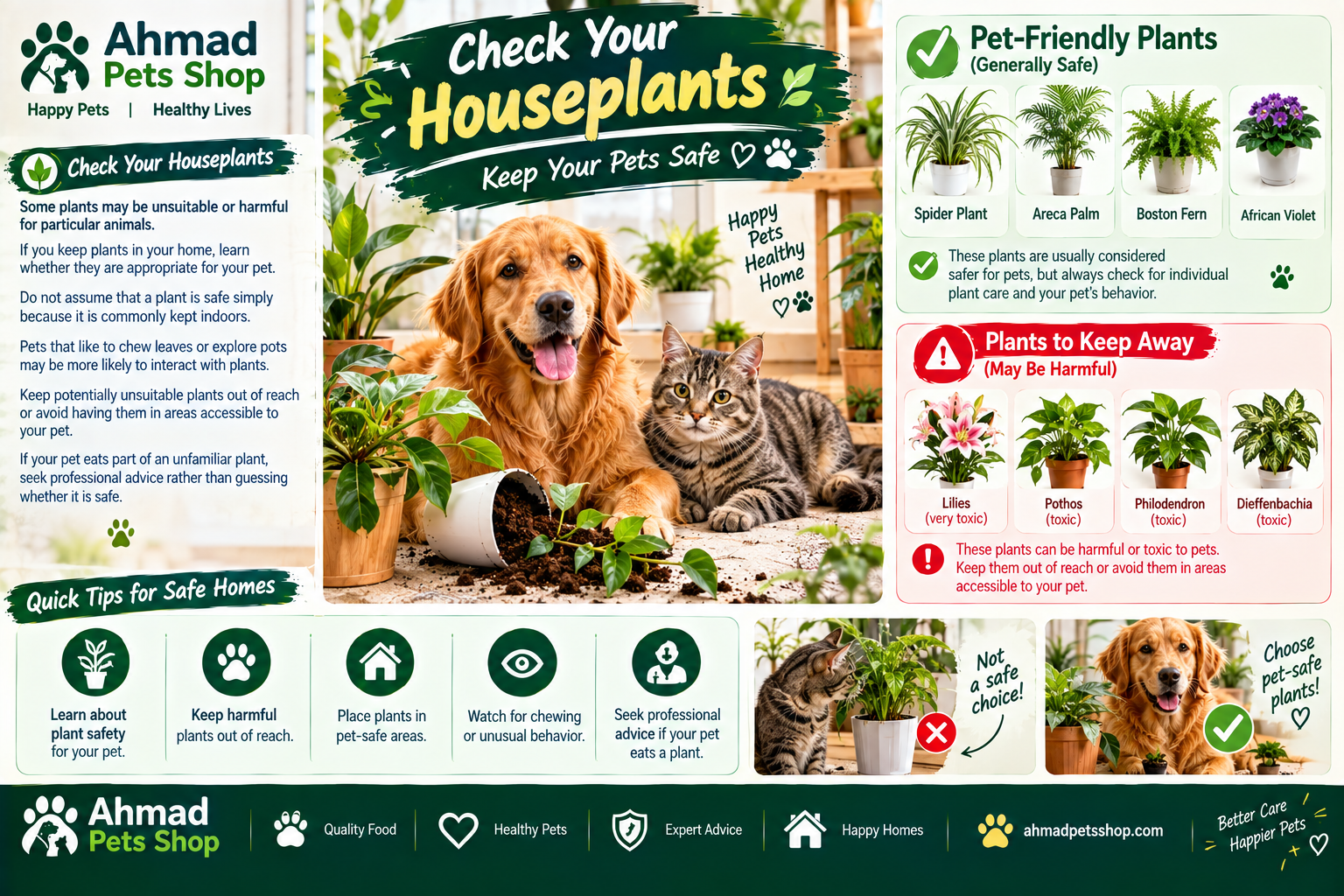
5. Check Your Houseplants 🌿
Some plants may be unsuitable or harmful for particular animals.
If you keep plants in your home, learn whether they are appropriate for your pet.
Do not assume that a plant is safe simply because it is commonly kept indoors.
Pets that like to chew leaves or explore pots may be more likely to interact with plants.
Keep potentially unsuitable plants out of reach or avoid having them in areas accessible to your pet.
If your pet eats part of an unfamiliar plant, seek professional advice rather than guessing whether it is safe.
6. Secure Windows and Doors 🚪
Open doors and windows can create risks for pets.
An animal may unexpectedly run outside, fall, or enter an unsafe area.
Make sure windows and doors are appropriately secured according to your pet’s behavior and the design of your home.
Be particularly careful when visitors enter or leave the house.
A pet that normally stays indoors may quickly move through an open door if something outside catches its attention.
Creating a simple routine for doors and windows can reduce this risk.
7. Remove Small Objects 🧸
Small household objects can attract curious animals.
Depending on the pet, objects such as coins, buttons, small toys, pieces of plastic, string, or other items may create a risk if swallowed.
Regularly check areas where your pet spends time and remove objects that are inappropriate for the animal.
Keep children’s small toys away from pets if they could be swallowed or damaged.
A clean and organized home can make it easier to identify potential hazards.
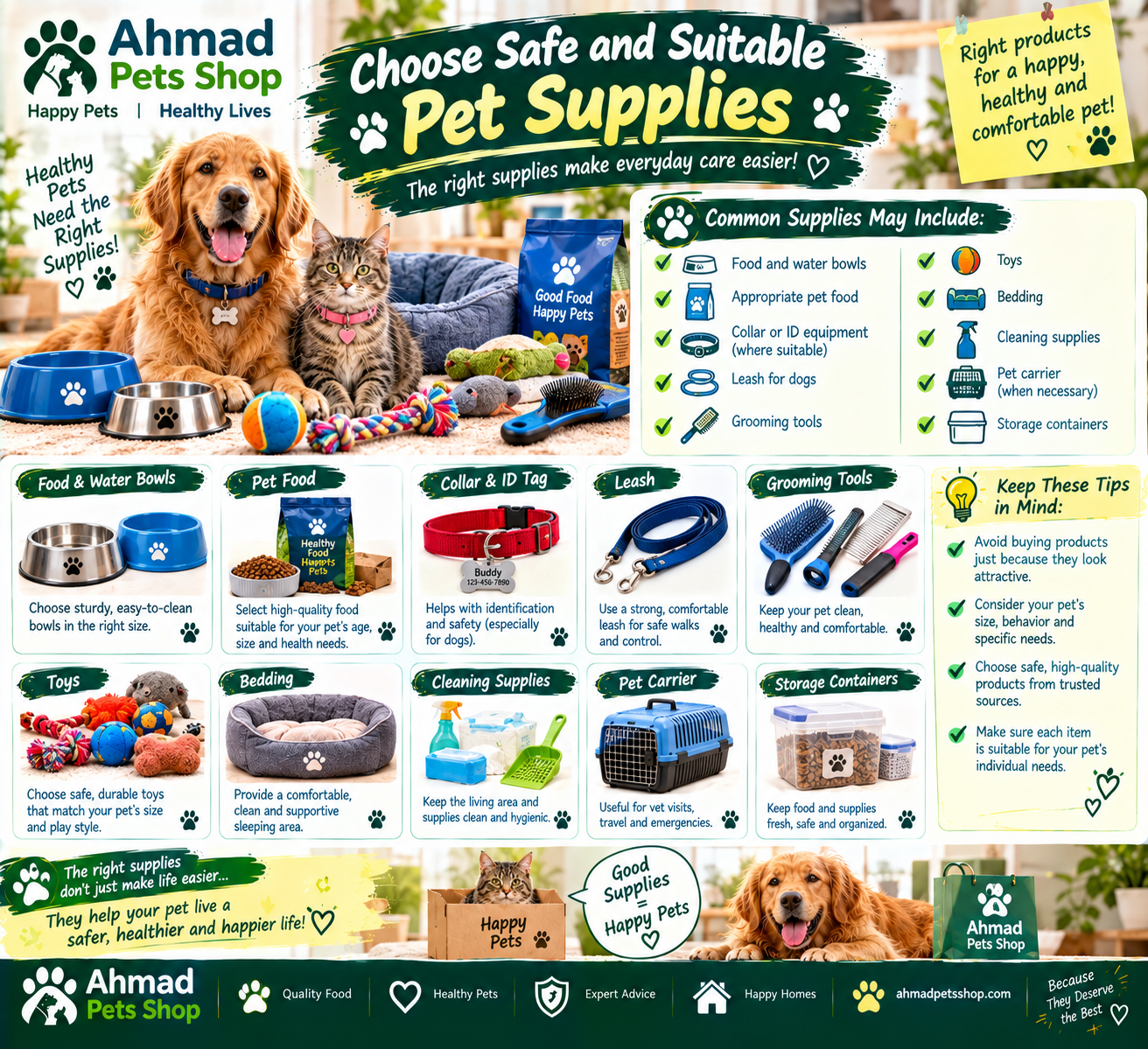
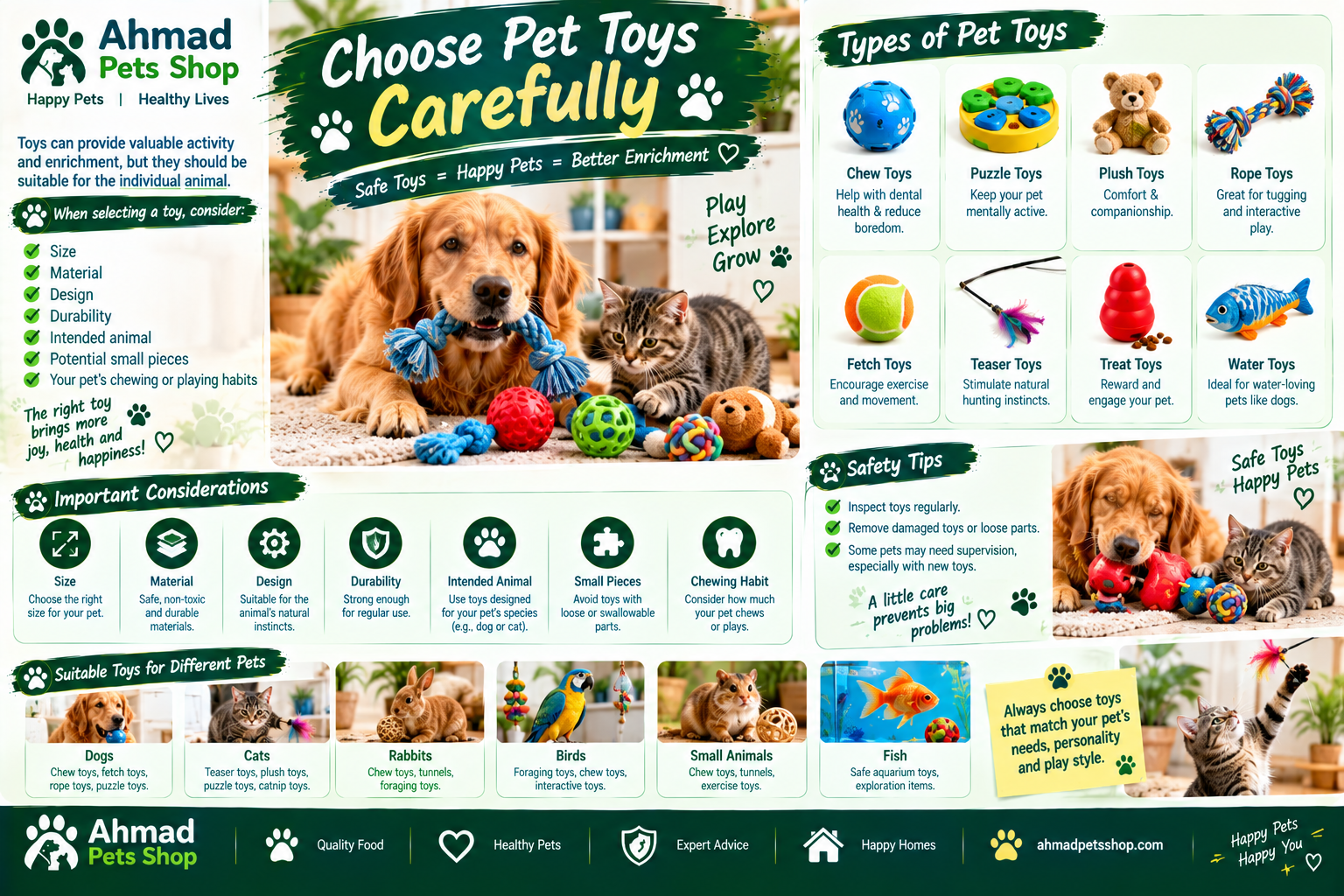
8. Choose Pet Toys Carefully 🐾
Toys can provide valuable activity and enrichment, but they should be suitable for the individual animal.
When selecting a toy, consider:
- Size
- Material
- Design
- Durability
- Intended animal
- Potential small pieces
- Your pet’s chewing or playing habits
Inspect toys regularly.
If a toy becomes damaged, develops loose parts, or becomes unsuitable, remove it.
Some pets may require supervision while using particular toys, especially when a product is new.
9. Keep Your Pet’s Sleeping Area Safe 🛏️
Pets need a comfortable place to rest.
The resting area should be appropriate for the animal’s size and behavior.
Keep bedding clean and inspect it regularly for damage.
The location should also be suitable. Avoid placing a pet’s resting area near obvious household hazards or areas with excessive heat, cold, or constant disturbance.
A comfortable resting space can help your pet feel secure within the home.
10. Be Careful With Heat and Temperature 🌡️
Temperature can affect animals differently.
Pets should have an environment that is appropriate for their species and individual needs.
Avoid leaving animals in places that become excessively hot or cold.
Cars can become particularly dangerous because temperatures can change rapidly.
Never assume that a short period in an unsuitable environment is harmless.
If you are concerned about your pet’s response to temperature, seek professional veterinary guidance.
11. Keep the Floor and Walking Areas Clear
Pets spend a lot of time close to the floor, so objects that people easily step around can become more important from an animal’s perspective.
Keep walking areas reasonably clear of:
- Sharp objects
- Small pieces of plastic
- Loose wires
- Broken items
- Food scraps
- Other unsuitable objects
Regular cleaning can make the home safer and easier to manage.
It can also help owners notice whether anything unusual has entered the pet’s environment.
12. Keep Pet Food Stored Properly 🥣
Pet food should be stored according to the manufacturer’s instructions.
Keep food containers closed and place them somewhere appropriate.
Allowing a pet to access an entire bag or container can result in overeating and may create other problems.
Food should also be protected from excessive moisture, heat, and contamination.
Check packaging before use and follow storage instructions carefully.
13. Keep Water Containers Clean 💧
Fresh water is an important part of everyday pet care.
Water bowls and containers should be checked and cleaned regularly.
Remove dirt, hair, food particles, or other material that may enter the container.
Place water somewhere accessible and appropriate for your pet.
If your pet’s normal water consumption changes significantly, contact a veterinarian, particularly if the change continues or occurs with other unusual symptoms.
14. Supervise Pets Around Children 👨👩👧👦
Pets and children can develop wonderful relationships, but supervision is important.
Children may not always understand an animal’s body language or personal boundaries.
Teach children to:
- Approach animals calmly
- Avoid pulling tails or ears
- Avoid disturbing pets while they are eating
- Avoid disturbing pets while sleeping
- Ask before handling unfamiliar animals
- Treat pets gently
Adults should provide appropriate supervision, especially with young children and unfamiliar pets.
This helps protect both the child and the animal.
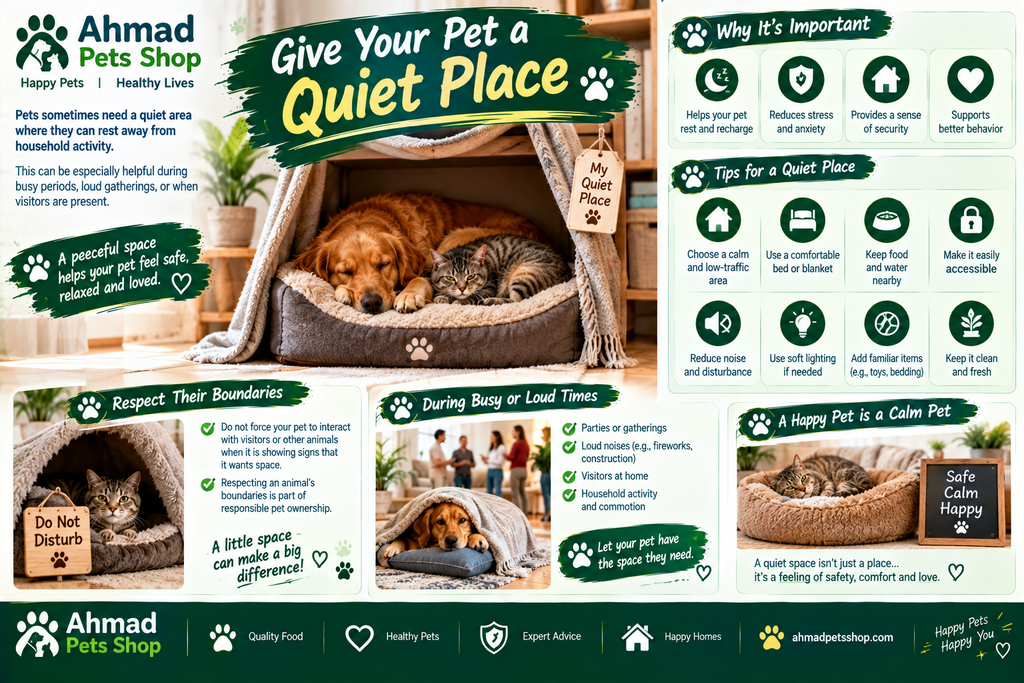
15. Give Your Pet a Quiet Place
Pets sometimes need a quiet area where they can rest away from household activity.
This can be especially helpful during busy periods, loud gatherings, or when visitors are present.
Your pet’s quiet area should be comfortable and accessible.
Do not force a pet to interact with visitors or other animals when it is showing signs that it wants space.
Respecting an animal’s boundaries is part of responsible pet ownership.
16. Keep New Pets Separate When Necessary 🐶🐱
If you already have a pet and are introducing another animal, the process should be handled carefully.
Do not assume that two animals will immediately get along.
The appropriate introduction process depends on the species, temperament, history, and circumstances of the animals.
Some introductions may require gradual contact and professional guidance.
If you have concerns about aggressive or fearful behavior, seek advice from a qualified veterinarian or animal behavior professional.
17. Be Careful With Pet Grooming Equipment ✂️
Grooming tools should be stored safely when they are not being used.
Items such as scissors, nail clippers, brushes, grooming products, and other equipment should not be left where a pet can chew or knock them over.
Use grooming tools appropriately and according to their intended purpose.
If you are unfamiliar with a grooming procedure, consider getting guidance from a qualified professional.
18. Keep Identification Information Updated 📋
Depending on the type of pet and local requirements, identification can be an important part of responsible ownership.
Make sure relevant contact information is kept up to date on appropriate identification methods.
If your pet becomes lost, accurate information can help support efforts to reunite the animal with its owner.
Discuss suitable identification options with a veterinarian or appropriate animal-care professional.
19. Prepare for Emergencies 🚨
Every pet owner should think about what they would do if an emergency occurred.
Keep important information easily accessible, such as:
- Your veterinarian’s contact details
- Emergency veterinary information
- Pet identification information
- Important medical records
- Relevant medication information
- A suitable carrier or transportation option
Knowing what to do before an emergency happens can help you respond more calmly.
If your pet is seriously injured, having difficulty breathing, has consumed something potentially dangerous, or is experiencing another emergency, seek professional veterinary assistance immediately.
20. Check Your Pet’s Environment Regularly 👀
Pet safety is not a one-time task.
Your home changes over time. Furniture moves, new products are purchased, visitors bring new objects, and pets may develop new habits.
Regularly inspect the environment and consider whether anything has changed that could create a new risk.
For example, a puppy that was previously unable to reach a table may eventually grow tall enough to access it.
A curious young pet may also begin exploring areas it previously ignored.
Regular observation helps you stay ahead of these changes.
Pet Safety Tips for Different Types of Pets 🐕🐈🐰🐦
Different animals require different approaches to safety.
Dogs
Dogs may chew, explore, jump, run, or open areas that seem secure.
Pay attention to food, electrical wires, doors, windows, toys, household chemicals, and outdoor access.
Cats
Cats can climb and squeeze into small spaces.
Secure windows, remove unsafe objects, and check high areas where your cat may explore.
Rabbits
Rabbits may chew wires, furniture, and other objects.
Protect electrical cables and provide a suitable environment with appropriate enrichment.
Birds
Birds require special attention because they can fly into unsafe areas or interact with household objects using their beaks.
Their environment should be appropriate for safe movement and activity.
Fish
Fish require appropriate water conditions and suitable aquarium maintenance.
Their environment should be monitored according to the requirements of the particular species.
The key lesson is simple: pet safety should always be based on the needs and natural behavior of the animal you own.
Responsible Pet Ownership ❤️
Keeping your pet safe is part of a larger responsibility.
Responsible pet ownership includes:
- Providing appropriate food
- Providing clean water
- Maintaining suitable housing
- Keeping the environment clean
- Providing appropriate exercise
- Offering enrichment
- Monitoring behavior
- Arranging veterinary care
- Choosing suitable supplies
- Protecting pets from avoidable hazards
Pet ownership requires patience and consistency.
You do not need to make your home perfect. Instead, focus on identifying realistic risks and creating a routine that supports your pet’s wellbeing.
How Ahmad Pets Shop Can Help 🐾
At Ahmad Pets Shop, our goal is to provide useful information for pet owners and animal lovers.
We cover topics related to pet care, pet supplies, feeding, grooming, safety, routines, and responsible ownership.
Our articles are designed to help visitors understand everyday pet-care topics in simple language.
For more pet-care information and helpful guides, visit Ahmad Pets Shop.
Final Thoughts
Learning how to keep your pet safe at home is an important part of becoming a responsible pet owner.
A safe home starts with simple actions: keeping harmful substances away, securing wires and windows, choosing appropriate toys, storing food properly, maintaining clean areas, supervising pets around children, and regularly checking the environment.
The exact safety requirements will depend on your pet.
What is safe for one animal may not be suitable for another, so always learn about the specific needs and behaviors of your pet.
When you are uncertain about a serious safety or health concern, professional veterinary advice is the right source of guidance.
Conclusion 🐾
Pet safety begins with awareness, preparation, and consistent care.
By looking at your home from your pet’s perspective, you can identify many potential hazards and make practical changes. Keeping chemicals and medicines secure, managing electrical wires, choosing suitable toys, protecting windows and doors, storing food correctly, and supervising interactions are all useful parts of responsible pet care.
Remember that pet safety is an ongoing responsibility. As your pet grows, your home changes, or you introduce new products and animals, review the environment again.
A safe home does not need to be complicated. Small, thoughtful habits can help create a more comfortable and secure environment for your pet.
For more practical pet-care information, visit Ahmad Pets Shop. 🐾❤️